Involuntary Account Closure: Why Your Bank or Card Issuer Shut You Down Without Warning

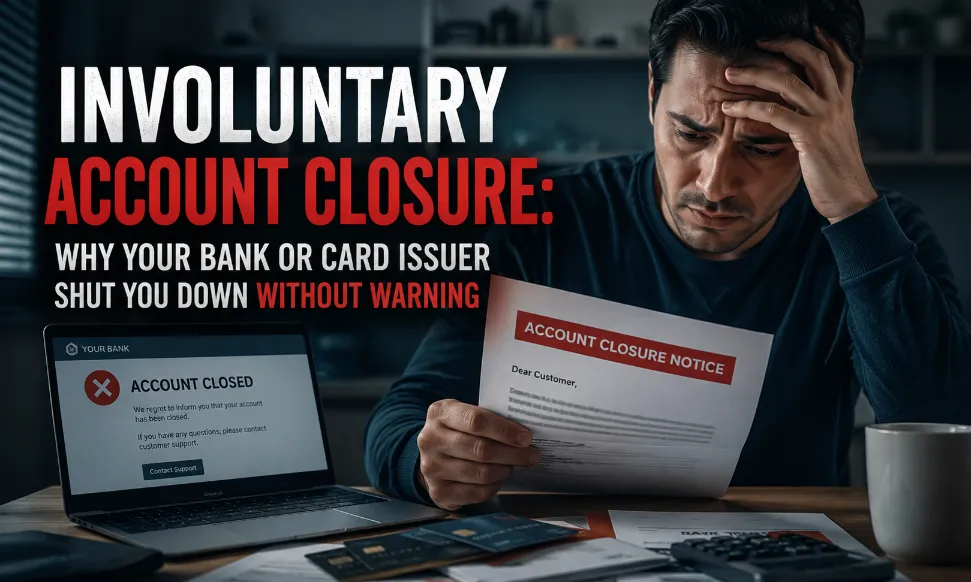
Bank account closure without warning can disrupt every part of your financial life. A blocked checking account, frozen credit card, or terminated banking relationship can prevent bill payments, delay direct deposits, and damage financial planning. Many people receive little or no advance notice because banks have legal and contractual rights to close accounts under specific circumstances.
The uncertainty often creates confusion about what happened and how to recover. This guide explains involuntary account closure in simple terms.
You will learn why banks and credit card issuers close customer accounts, what documents and regulations influence these decisions, how to recover your money, how closures affect your credit, and the practical steps that reduce the risk of future account shutdowns.
Every section focuses on helping you understand the process and respond effectively.
Why Banks and Card Issuers Close Accounts Without Warning
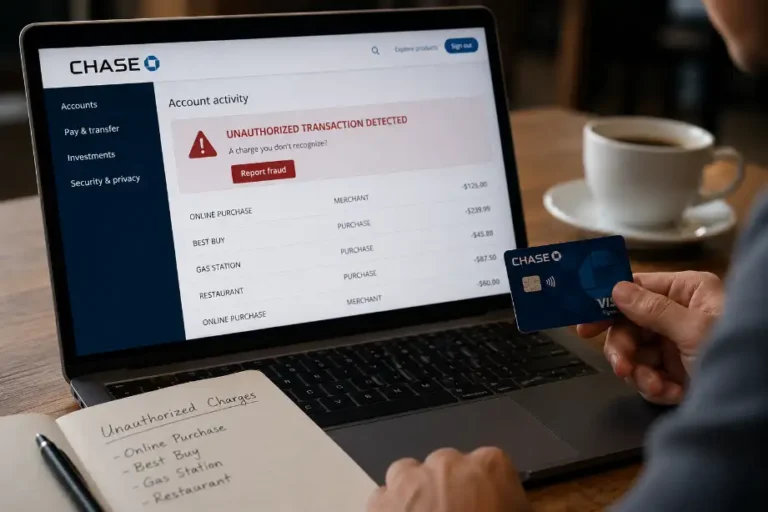
Financial institutions monitor customer accounts continuously to comply with banking regulations and manage financial risk. Banks use automated monitoring systems, fraud detection software, and compliance reviews to identify unusual account activity. When these systems detect behavior that violates account agreements or regulatory requirements, the institution may immediately close the account.
Common reasons for involuntary account closure include:
| Reason | Explanation | Typical Result |
|---|---|---|
| Suspected fraud | Unusual transactions or identity concerns | Immediate restriction or closure |
| Anti Money Laundering compliance | Activity that requires regulatory action | Account termination |
| Repeated overdrafts | Excessive negative balances | Bank relationship ended |
| Returned payments | Frequent unpaid checks or ACH returns | Higher account risk |
| False information | Incorrect application details | Account closure |
| Terms and conditions violations | Breach of customer agreement | Closure without notice |
| Identity verification failure | Unable to confirm customer identity | Account suspended or closed |
| High financial risk | Internal risk assessment | Banking relationship terminated |
Banks also comply with Know Your Customer requirements. These regulations require institutions to verify customer identities and monitor financial activity throughout the relationship.
Some closures occur because of prolonged inactivity. Other closures result from repeated customer complaints involving abusive behavior toward employees. Every financial institution maintains its own internal risk policies.
Text Infographic
Account Activity
        │
        ▼
Automated Monitoring
        │
        ▼
Risk Detection
        │
 ┌──────┴────────┐
 │               │
Low Risk      High Risk
 │               │
Continue      Manual Review
Service            │
                   ▼
      Restriction or Closure
Customers rarely receive detailed explanations because privacy laws and financial crime investigations often prevent banks from disclosing internal decisions.
What Happens After an Involuntary Account Closure
An involuntary account closure follows a structured process even when the customer receives little warning. Understanding the timeline helps reduce confusion and supports faster recovery.
A bank first places restrictions on the account if necessary. Debit cards may stop working immediately. Online banking access may become limited. Automatic payments may fail. Direct deposits may also be rejected depending on the timing of the closure.
If money remains in the account, the bank generally reviews outstanding transactions before releasing the remaining balance. Pending debit card purchases, scheduled transfers, and deposited checks must settle before the institution determines the final available balance.
Typical timeline:
| Stage | What Happens |
|---|---|
| Account review | Bank investigates activity |
| Access restriction | Cards and online access may stop |
| Transaction settlement | Pending items are processed |
| Final balance calculation | Remaining funds are determined |
| Funds returned | Check or electronic payment issued if applicable |
Documents that may become necessary include:
- Government-issued photo identification
- Account statements
- Proof of address
- Social Security Number or Tax Identification Number
- Transaction records
- Correspondence from the bank
Some banks mail a cashier’s check for the remaining balance. Others require customers to visit a branch or verify identity before releasing funds.
Credit card account closures differ slightly. Existing balances usually remain payable under the original repayment terms. Customers must continue making monthly payments until the balance reaches zero.
Common problems after closure include:
- Missed automatic bill payments
- Returned payroll deposits
- Subscription payment failures
- Check payment rejection
- Merchant authorization declines
Customers should immediately notify employers, utility providers, lenders, insurance companies, and subscription services after learning that an account has been closed.
How Involuntary Account Closure Affects Your Credit and Financial Future
An involuntary bank account closure does not automatically damage your credit score. The impact depends on the type of account and the circumstances surrounding the closure.
Checking accounts and savings accounts generally do not appear on standard consumer credit reports. However, unpaid overdraft balances may eventually be transferred to a collection agency. Collection accounts can negatively affect credit scores if reported to the major credit bureaus.
Credit card closures create different consequences.
Potential effects include:
| Situation | Possible Credit Impact |
|---|---|
| Closed account with zero balance | Usually limited impact |
| Closed account with balance | Utilization ratio may increase |
| Collection account | Significant negative impact |
| Missed payments after closure | Credit score decline |
| Reduced available credit | Higher utilization percentage |
Financial institutions also use specialty banking reporting agencies to evaluate customer banking history. Banks reviewing new account applications may consult these reports before approving a checking account.
Benefits of understanding closure consequences include:
- Faster financial recovery
- Better credit protection
- Improved banking eligibility
- Lower risk of future account denial
Limitations also exist.
Banks are generally not legally required to maintain customer relationships indefinitely. Customer agreements often allow either party to terminate the relationship with limited notice unless state or federal law requires otherwise.
Best practices after closure include:
- Request written confirmation.
- Pay outstanding balances immediately.
- Monitor credit reports regularly.
- Keep copies of all communications.
- Open a replacement account quickly.
- Update all automatic payment information.
Customers should also review annual banking records to identify patterns that may increase institutional risk assessments.
How to Prevent Future Account Closures and Resolve Banking Problems
Preventing another involuntary account closure requires consistent account management and proactive communication with financial institutions.
Start by maintaining accurate personal information. Notify the bank immediately after changing your address, phone number, legal name, or employment information.
Complete identity verification requests promptly. Banks periodically request updated documentation to satisfy regulatory obligations.
Recommended documents include:
- Driver license or passport
- Utility bill
- Social Security documentation
- Tax identification records
- Employer verification when requested
Avoid behavior that commonly triggers compliance reviews.
Examples include:
- Frequent large cash deposits without clear documentation
- Rapid movement of funds between multiple accounts
- Receiving payments for unknown third parties
- Repeated chargebacks
- Excessive overdrafts
- Unexplained international transfers
Prevention Checklist
✓ Verify identity documents
✓ Keep contact details current
✓ Monitor account activity weekly
✓ Avoid repeated overdrafts
✓ Maintain sufficient balances
✓ Respond to bank notices quickly
✓ Keep transaction records
✓ Report suspicious activity immediately
If your account has already been closed, follow this recovery process:
- Contact the bank immediately.
- Request written confirmation of the closure.
- Ask how remaining funds will be returned.
- Update direct deposits.
- Replace automatic bill payment information.
- Pay outstanding balances.
- Keep copies of every communication.
- Review your credit reports over the following months.
- Open a new account with another financial institution if necessary.
Common Error Messages and Their Meaning
| Error Message | Possible Meaning | Recommended Action |
|---|---|---|
| Account Closed | Banking relationship ended | Contact the bank |
| Transaction Declined | Account restricted | Verify account status |
| Card Not Authorized | Debit or credit card disabled | Request replacement information |
| Invalid Account Number | Account removed from processing | Update payment information |
| Deposit Rejected | Closed account cannot receive funds | Provide new banking details |
Safety remains important throughout the recovery process.
Never share online banking passwords with anyone claiming to help recover your account. Verify all communications through the official customer service channels listed by your financial institution. Watch for phishing emails that appear after account closures because scammers often target customers during periods of uncertainty.
Some situations also qualify for appeal. If the closure resulted from identity theft, fraud committed by another person, or incorrect information, provide supporting documentation and request a formal review. Although banks are not always required to reopen accounts, correcting inaccurate records may improve future banking opportunities.
Frequently Asked Questions
Can a bank legally close my account without giving advance notice?
Yes, most account agreements allow banks to close accounts immediately when permitted by applicable laws and regulations.
Will I lose the money that remained in my account?
No, eligible remaining funds are generally returned after pending transactions and required reviews are completed.
Can I open a new bank account after an involuntary closure?
Yes, although approval depends on your banking history and the policies of the new financial institution.
Does a closed checking account automatically lower my credit score?
No, unless unpaid debts related to the account are reported as collections or missed credit obligations.
How long should I keep records after an account closure?
Retain account statements, correspondence, and payment records for several years in case future disputes or verification requests arise.