
 InternationalCrispy Zinger Burger
Professional Mayonnaise
Thick, garlicky restaurant-style mayonnaise with the exact oil ratio pros use — ready in 15 minutes.
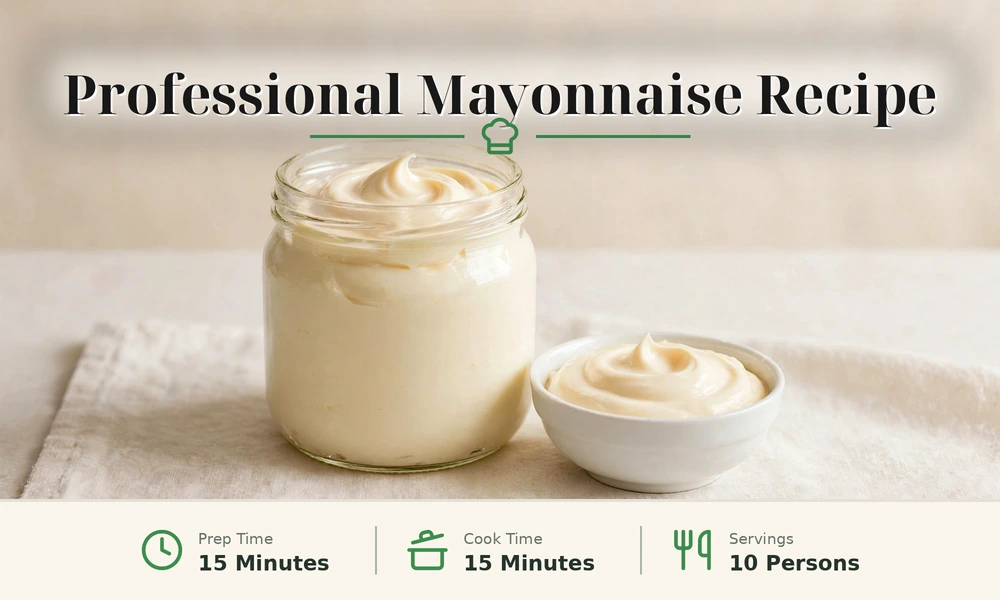
Prep Time:15 minutes
Total Time:30 minutes
Servings:About 5 cups (1.2 litres)
Allergen warning
This recipe contains: Dairy, Egg. If you have a food allergy, check every ingredient label before cooking.
On this page
Restaurants use mayonnaise with high oil content because the oil carries flavor and builds body. Home recipes often use too little oil and taste eggy and thin. This recipe uses the professional ratio: 1 liter of oil to 3 eggs. Garlic, black pepper, salt, sugar, milk powder, and vinegar balance the flavor. Milk powder adds creaminess, vinegar sharpens the taste, and black pepper and garlic give the familiar restaurant profile. Nothing here is rushed. Each stage has a purpose.
| Calories | Protein | Carbs | Fat |
|---|---|---|---|
| 185 | 0.5 g | 1 g | 20 g |
Estimated values per serving. See the Nutrition section below for details.
🧂 Ingredients
- 3 fresh eggs, at room temperature
- 1 liter neutral cooking oil
- 2 to 3 pieces of garlic
- 1 teaspoon black pepper
- 1 teaspoon sugar
- 2 tablespoons salt
- 1 tablespoon dry milk powder
- 4 to 5 tablespoons vinegar
Method
Step 1: Add the eggs to the blender
Crack 3 fresh eggs into the blender jar. Check for shell pieces. Remove any shells you see. Use room temperature eggs. Cold eggs resist emulsification and slow the process.
Step 2: Add all ingredients except the oil
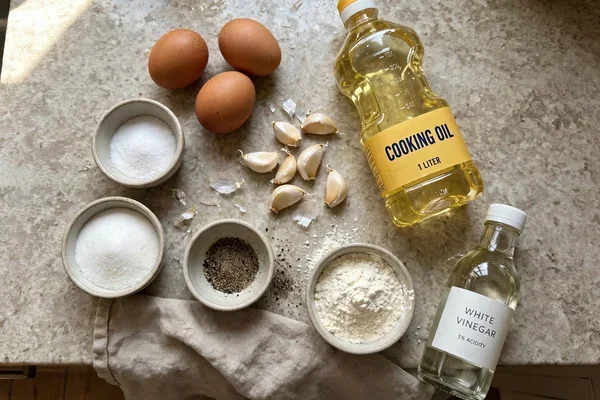
Add 2 tablespoons salt to the jar. Add 1 teaspoon sugar. Add 1 teaspoon black pepper. Add 1 tablespoon dry milk powder. Add 2 to 3 garlic pieces. Pour 4 to 5 tablespoons vinegar. Do not add the oil yet. The oil enters only while the blender runs.
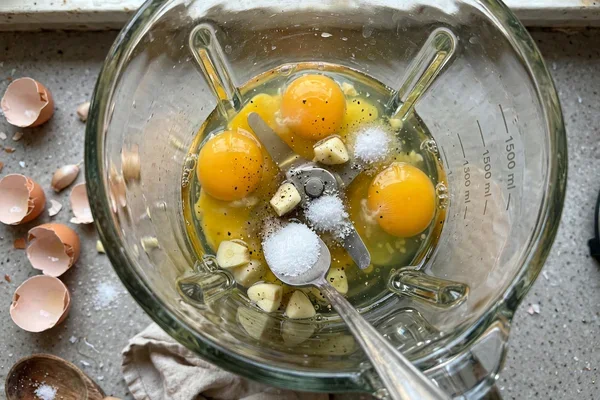
Step 3: Blend the base mixture
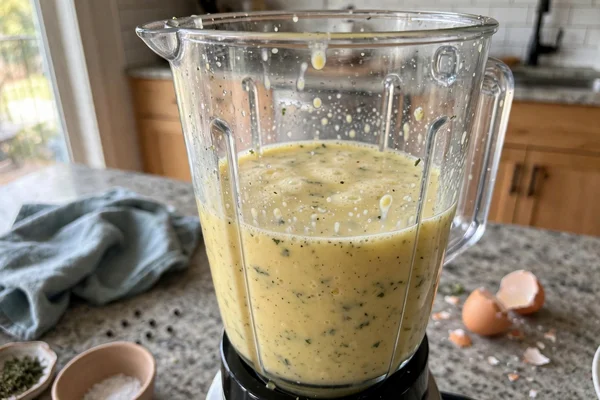
Close the lid tightly. Run the blender on medium speed for 30 seconds. The garlic pieces break down. The sugar and salt dissolve into the eggs. The mixture looks thin and pale yellow. This appearance is normal at this stage.
Step 4: Prepare the oil stream
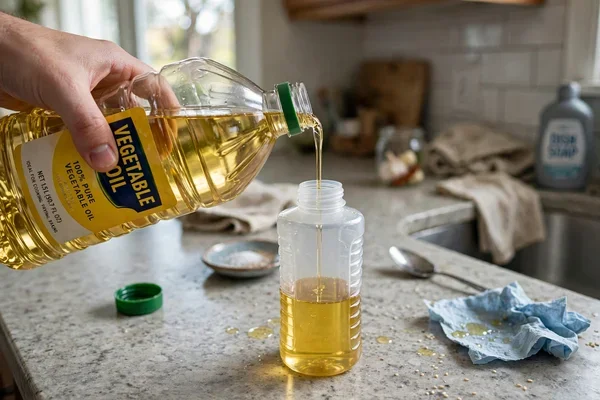
Pour 1 liter of cooking oil into a squeeze bottle or plastic bag. Cut a very small hole in the cap or one corner. The oil must flow in a thin, slow stream. Test the stream over the sink before you begin. A thick stream breaks the emulsion later.
Step 5: Rest the blender motor
Let the blender rest if the motor feels hot. Give it 2 minutes. You cannot turn the blender off during the next step. A hot motor may burn out under the heavy load of thick mayonnaise.
Step 6: Pour oil into the running blender
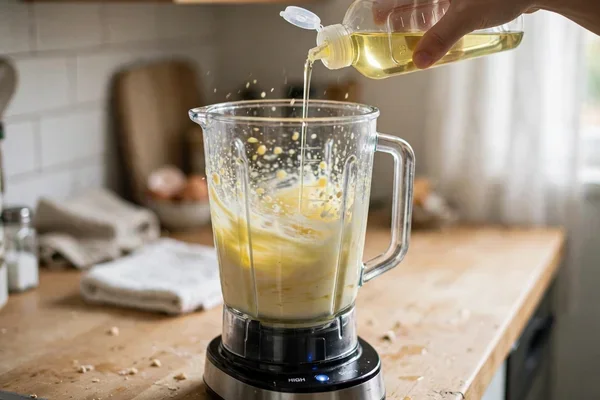
Turn the blender to full speed. Pour the oil in a continuous thin stream. Keep the stream thinner than a pencil. Do not rush this step. It takes 8 to 10 minutes to pour 1 liter of oil. Keep the blender running without pauses. Stopping breaks the emulsion.
Step 7: Watch for the emulsion to form
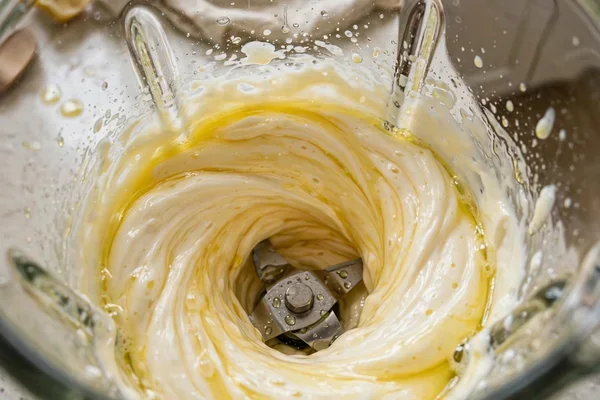
After 200 to 300 milliliters of oil, the mixture turns white and thick. The vortex in the center shrinks. The blender sound deepens. These signs show the emulsion is forming. You are doing it correctly at this point. If the mixture shows no thickness even after 500 milliliters of oil, the emulsion has failed. Read the rescue section below.
Step 8: Fold the oil with a spatula
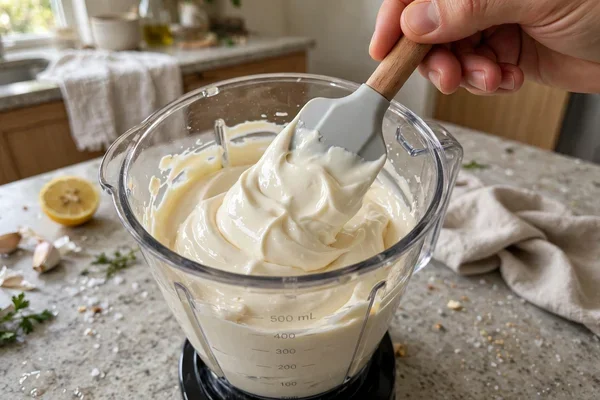
The mixture grows too thick for the blades to circulate it. Push the oil from the sides into the center with a long spatula. Keep the blender running while you fold. Keep your fingers and the spatula handle clear of the blades. Work slowly and steadily. This stage needs patience, not force.
Step 9: Finish all the oil
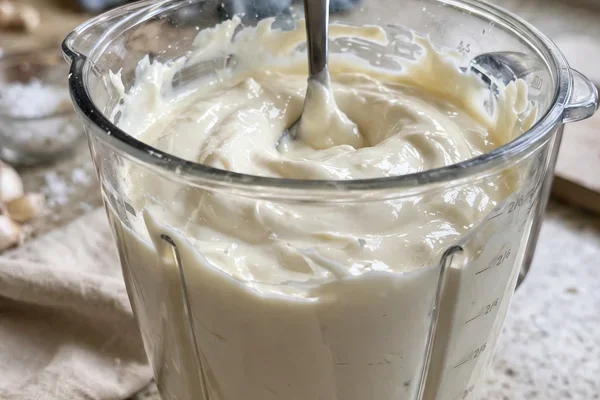
Pour the full 1 liter of oil into the batch. The final mayonnaise looks very thick, white, and glossy. A spoon stands upright in it. Stop the blender. The mayonnaise is complete.
Step 10: Taste and adjust the seasoning
Taste 1 teaspoon of the mayonnaise. Add more salt or sugar if needed. Dissolve any extra seasoning in 2 tablespoons of vinegar first. Blend the vinegar mixture into the batch for 10 seconds. Seasoning dissolves poorly in thick mayonnaise. It dissolves easily in vinegar.
Step 11: Bottle the mayonnaise
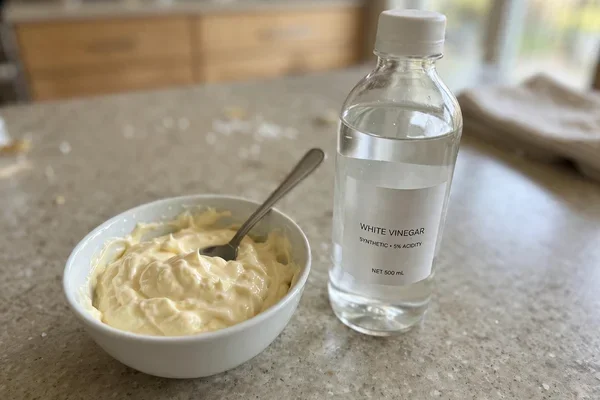
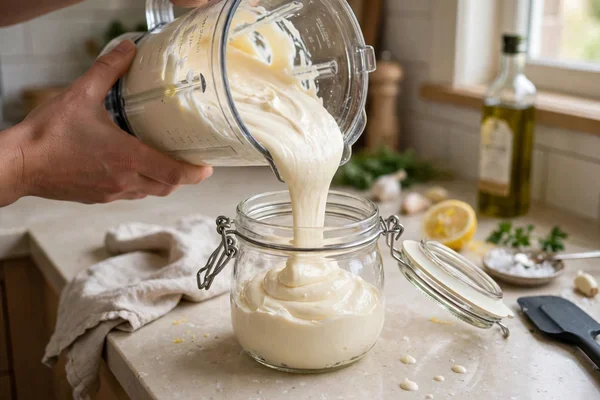
Transfer the mayonnaise into a clean airtight bottle or glass jar. Press out air bubbles with the spatula. Close the lid tightly. Place the bottle in the refrigerator immediately. Never leave homemade mayonnaise at room temperature.
Nutrition
A 30 gram serving (about 2 tablespoons) provides an estimated 185 calories, 0.5 grams of protein, 1 gram of carbohydrates, and 20 grams of fat. These Atwater system values (4 calories per gram of protein, 4 per gram of carbohydrate, 9 per gram of fat) cover the full batch: 3 eggs, 1 liter of oil, garlic, vinegar, and the seasonings.
The batch is about 70 percent oil by weight, so almost every calorie comes from fat. One tablespoon of oil provides about 119 calories according to USDA FoodData Central, and 2 tablespoons of mayonnaise add roughly 370 calories to a sandwich or burger. Adults need around 2000 to 2500 calories per day according to the World Health Organization, so measure your portions.
Note
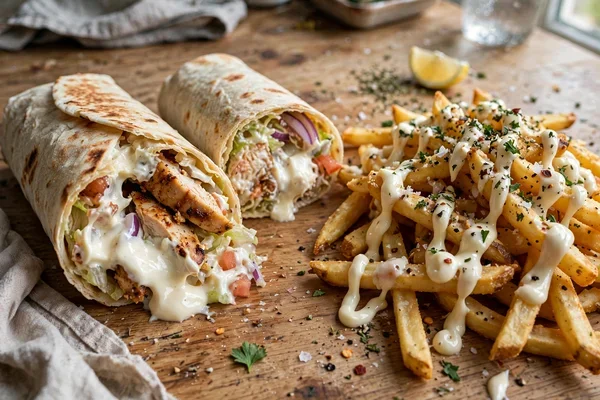
Homemade mayonnaise is calorie dense by design. One tablespoon is enough on a shawarma wrap or a burger bun.
Equipment you need
Countertop blender with a tight-fitting lid
Long spatula
Squeeze bottle or plastic bag with a very small hole in the cap
Clean glass jar or airtight bottle for storage
How to fix broken mayonnaise
Mayonnaise that stays thin after 500 milliliters of oil means the emulsion failed. The oil stream ran too fast or the blender stopped. Do not throw the batch away. Pour the broken mixture into a bowl. Clean and dry the blender jar. Blend 1 fresh egg for 10 seconds, then pour the broken mixture back in a thin, slow stream while the blender runs. The emulsion forms again within 1 minute. The rescued batch tastes the same.
Note
Never stop the blender during the oil pour. Stopping breaks the emulsion and the batch fails. Keep it running for the full 8 to 10 minutes.
Note
Chill the jar before filling it. A cold jar keeps the mayonnaise firm from the first minute.
How to store homemade mayonnaise
Refrigerate the bottle at all times. It keeps for 7 to 10 days. Use a clean spoon each time. Discard it if it smells sour or changes color.
Ways to use this mayonnaise
Pizza: Spread it under the cheese or use it as a crust dipping sauce.
Pasta: Mix it into cooked, cooled pasta for a creamy cold salad.
Shawarma: Spread a thick layer inside the wrap (Bahraini chicken shawarma recipe).
Burgers: Use it on the bun as the main sauce or as a dip (crispy hot wings recipe).
FAQs
Does it taste like restaurant mayonnaise?
Yes. Restaurants use the same high oil ratio and garlic seasoning, so the taste matches.
Why did my mayonnaise stay thin?
The oil stream was too fast, or the blender stopped during pouring. Emulsification needs a continuous thin stream. Use the rescue method above to fix the batch.
How long does it last in the fridge?
It lasts 7 to 10 days in an airtight bottle in the refrigerator. Discard it after 10 days.
Related recipes
InternationalCrispy Zinger Burger InternationalBahraini Chicken Shawarma
 InternationalCreamy Restaurant Pasta