
 Desi ClassicsLahori Kata Kat
Balochi Namkeen Rosh
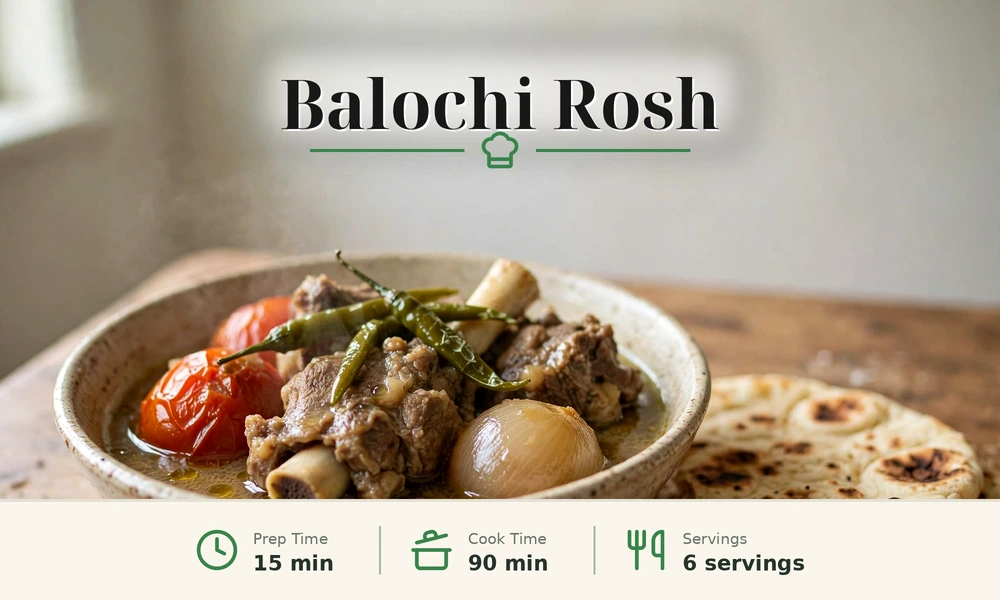
Tender mutton slow-cooked in its own juices with minimal spices — namkeen rosh.
Prep Time:15 minutes
Total Time:1 hour 45 minutes
Servings:6
On this page
Balochi rosh uses fewer ingredients than almost any other meat dish in Pakistan. There are no chopped onions, no tomato paste, no oil, and no spice blend. The cook places mutton pieces with their own fat into a heavy pot, adds salt, whole black peppercorns, a few pieces of ginger, and whole uncut tomatoes and onion. Then the pot is sealed and left on low heat. The meat releases its own juices and cooks in its own fat for about 90 minutes. The result is famous across Quetta for one reason: the pure flavor of the meat itself. This recipe follows the traditional sealed pot method with exact quantities. Continue reading for the sealing technique that traps the steam, the timing that keeps the meat juicy, and the final step that adds the signature aroma.
| Calories | Protein | Carbs | Fat |
|---|---|---|---|
| 600 | 30 g | 3 g | 48 g |
Estimated values per serving. See the Nutrition section below for details.
🧂 Ingredients
- 1.5 kg mutton on the bone, cut into large pieces
- 150 g mutton fat (charbi), cut into chunks
- 2 teaspoons (12 g) fine sea salt
- 12 whole black peppercorns
- 1 large onion, about 150 g, peeled but left whole and uncut
- 2 medium tomatoes, about 200 g, left whole and uncut
- 1 piece fresh ginger, about 5 cm, peeled and cut into 3 thick slices
- 3 to 4 green chilies
- 250 ml water
Method
Step 1
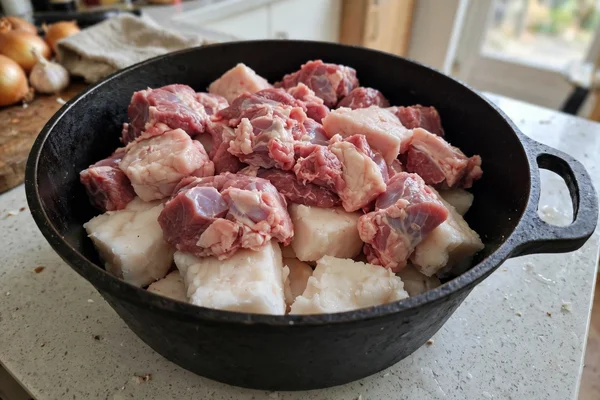
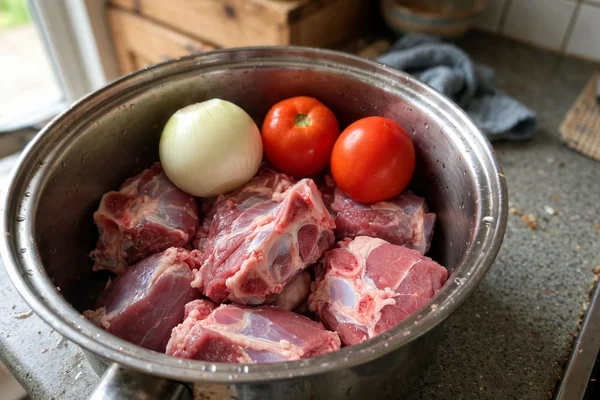
Rinse the mutton pieces and pat them dry. Place the mutton fat chunks in the bottom of a heavy pot or degchi. Layer the mutton pieces over the fat.
Step 2
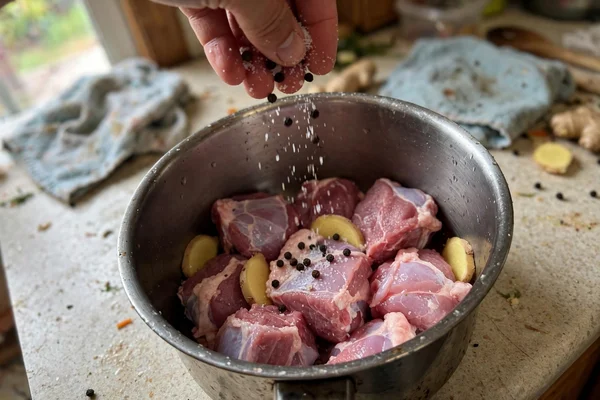
Sprinkle the salt and whole black peppercorns over the meat. Tuck the ginger slices between the pieces.
Step 3
Place the whole peeled onion and the 2 whole tomatoes on top of the meat. Do not cut them. They will soften in the steam and release gentle flavor without making the dish sour or sweet.
Step 4
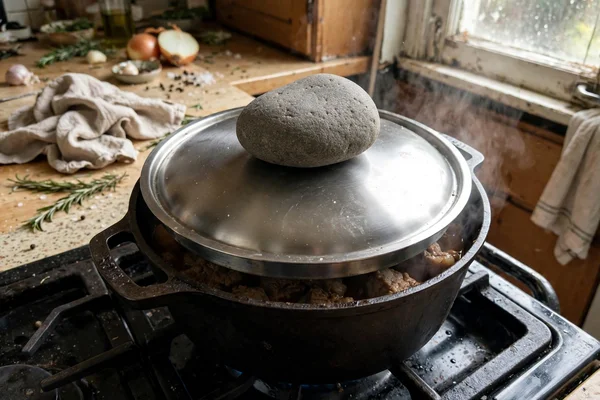
Pour the water around the edges of the pot. Cover the pot with a tight fitting lid. Place a heavy weight on the lid so no steam escapes. A clean stone or a heavy pan works well.
Step 5
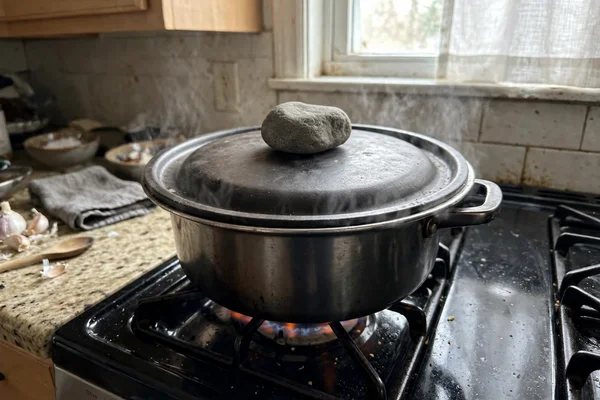
Cook on the lowest possible heat for 90 minutes. Do not lift the lid during this time. The sealed pot traps steam, and the mutton cooks in its own fat and juices.
Step 6
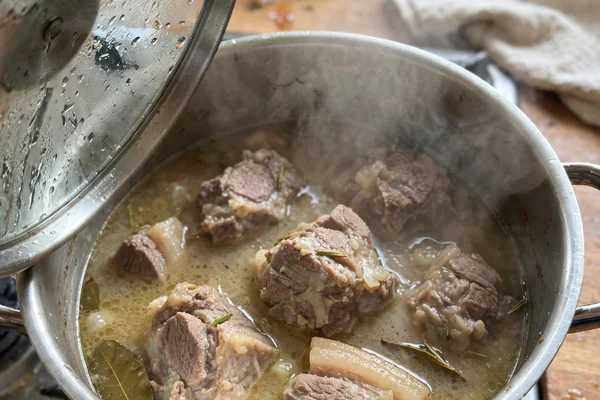
After 90 minutes, remove the weight and lift the lid. The meat should be tender and pull easily from the bone. Most of the water will have cooked down into a light natural gravy.
Step 7
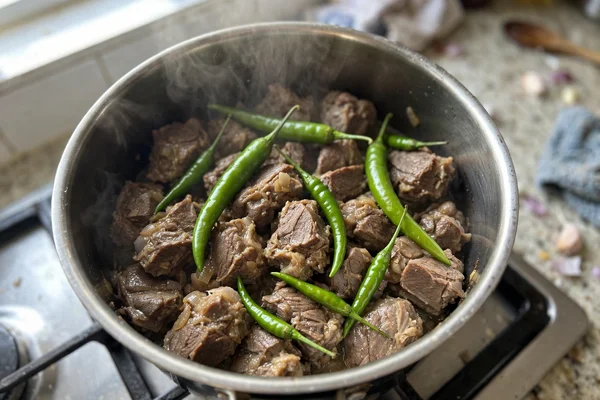
Lay the green chilies on top of the meat. Cover the pot again and rest for 5 minutes off the heat. The chilies release their aroma into the steam.
Step 8
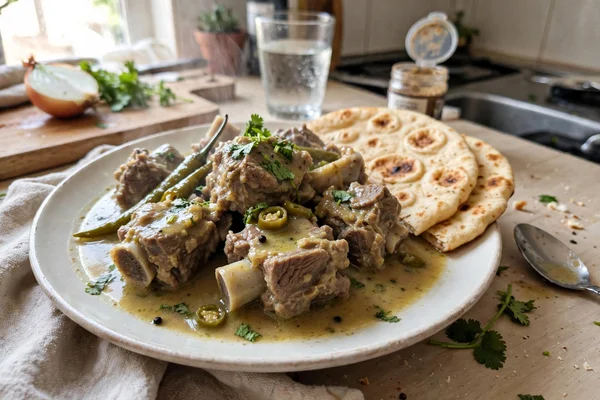
Serve hot with warm kaak bread, naan, or plain boiled rice. Spoon the natural gravy over the meat.
Pro Tips
> Never pierce the meat during cooking. Every lid lift releases the trapped steam.
- Keep the heat truly low. The seal only works if the liquid barely simmers. High heat burns the fat at the bottom before the meat turns tender.
- Use meat on the bone with a good layer of fat. Bones add depth to the gravy and fat carries the flavor. Lean boneless cuts dry out.
- Do not add extra water halfway through. If the seal holds, 250 ml is enough for 1.5 kg of meat. The mutton releases its own moisture.
- Leave the tomatoes and onion whole until serving. They break apart easily with a spoon and add sweet notes to each bite.
- Taste before adding more salt. 2 teaspoons is usually correct for this quantity.
- Choose a pot with a heavy lid that sits flat. A light lid lets steam escape even with a weight on it.
- Start with cold meat and cold water. A cold start draws juice from the meat slowly. A hot start seizes the surface and locks the juices inside.
- If the gravy looks too thin at 90 minutes, cook uncovered for 10 minutes.
Nutrition
One serving provides an estimated 600 calories, 30 grams of protein, 3 grams of carbohydrates, and 48 grams of fat. These values use the Atwater system, which assigns 4 calories per gram of protein, 4 calories per gram of carbohydrate, and 9 calories per gram of fat. They cover the mutton, the rendered fat, and the vegetables. Bread or rice adds more calories and carbohydrates.
One serving covers roughly a quarter of the 2000 to 2500 calories an adult needs per day according to the World Health Organization. Most of the energy comes from fat, because the dish cooks in its own rendered fat. Cooked lean beef provides about 26 grams of protein per 100 grams according to USDA FoodData Central, and mutton provides a comparable amount.
Note
Rosh is naturally high in fat. Enjoy it as an occasional dish.
Troubleshooting
The meat is tough after 90 minutes. The seal leaked, or the heat ran too high. Check the lid fit and the weight. Add 100 ml of water and cook for 20 more minutes on low heat.
FAQs
Can I make rosh with beef instead of mutton?
Yes. Use 1.5 kg of beef on the bone with some fat. Beef needs about 2 hours on low heat because its fibers are denser. Follow the same sealed pot method.
Can I skip the mutton fat?
No. The fat is essential to this dish. It renders down and forms the cooking medium, since no oil is added. If your butcher trimmed the fat, ask for 150 g of charbi separately.
Do the tomatoes and onion really go in whole?
Yes. Traditional rosh never chops them. Whole tomatoes and onion soften in the trapped steam and release mild flavor. Chopping them would make the gravy too sharp and watery.
Is rosh the same as namkeen gosht?
Yes. Rosh is the Balochi name for the dish, and namkeen gosht is the name used in Peshawar and Punjab. Both mean salted meat cooked with minimal spices. The technique is the same.
Can I add garam masala or turmeric to rosh?
No. Adding a spice blend changes the dish into something else. Rosh is prized for pure meat flavor, and the recipe works because only salt and black pepper season it.
Why does my rosh taste bland even though I used enough salt?
The seal leaked. Flavor concentrates only when steam stays trapped. Check the lid fit and the weight.
Can I cook rosh in a pressure cooker?
Yes, but the flavor changes slightly. Cook the same ingredients under pressure for 25 minutes with the 250 ml of water. Release the pressure naturally. The sealed pot version tastes richer because nothing escapes.
Conclusion
Balochi rosh shows what happens when a cook trusts the ingredient. Salt, black pepper, whole spices, and 90 minutes of sealed steam turn simple mutton into one of the most satisfying dishes of Balochistan. Keep the seal tight and the heat low, and the pot does the rest.
Related recipes
Desi ClassicsLahori Kata Kat Desi ClassicsChapshoro (Hunza Meat Pie)