
 BBQ & GrillCrispy Hot Wings
Balochi Sajji
Whole chicken slow-roasted over coals with just salt — Balochistan's legendary BBQ.
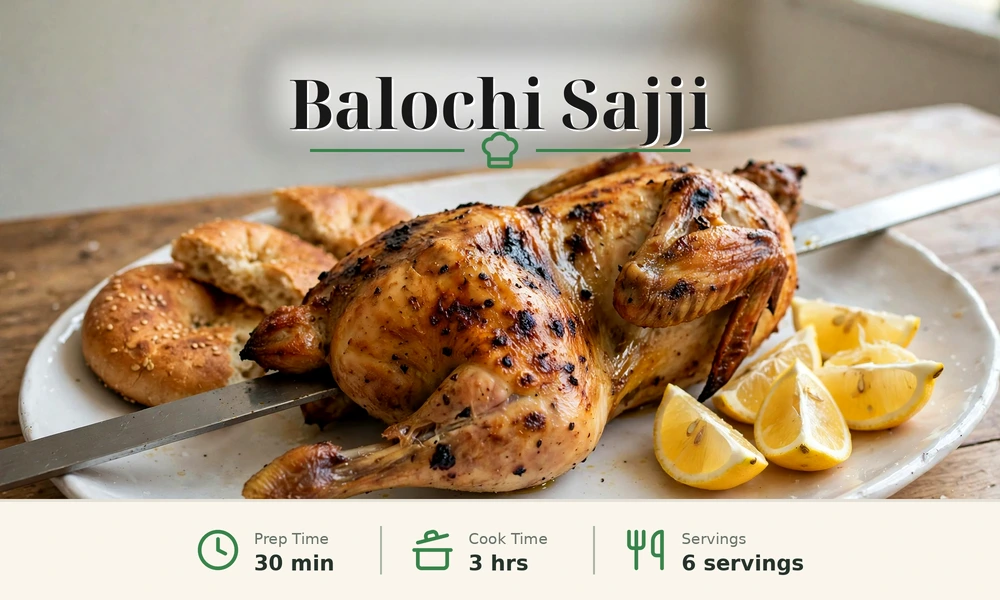
Prep Time:30 minutes, plus 4 hours marinating
Total Time:3 hours 30 minutes, plus marinating
Servings:6
Allergen warning
This recipe contains: Gluten, Dairy. If you have a food allergy, check every ingredient label before cooking.
On this page
Sajji begins in the open desert, not in a kitchen. Baloch tribes in the harsh lands of Balochistan roasted whole animals on iron skewers planted over beds of burning coals. No oven, no marinade, no sauce. Salt was often the only seasoning, because the goal was the flavor of the meat itself, kissed by wood smoke. That technique survives today in every sajji shop in Quetta, where whole chickens turn slowly over glowing embers for 3 to 4 hours until the skin crisps and the meat stays juicy. This recipe recreates authentic Balochi sajji at home with a simple salt and lemon marinade and a slow roast over real coals. Keep reading for the exact skewer method, the resting time that keeps the meat juicy, and the serving tradition that completes the dish.
| Calories | Protein | Carbs | Fat |
|---|---|---|---|
| 500 | 48 g | 2 g | 32 g |
Estimated values per serving. See the Nutrition section below for details.
🧂 Ingredients
- 1 whole chicken, about 1.8 kg, skin on
- 3 tablespoons (50 g) fine sea salt
- 2 tablespoons (30 ml) white vinegar
- 2 tablespoons (30 ml) fresh lemon juice
- 4 cloves garlic, crushed to a paste (optional)
- 3 tablespoons (45 ml) cooking oil or melted butter, for basting
- 2 lemons, cut into wedges, for serving
- Warm kaak bread or naan, for serving
Method
Step 1
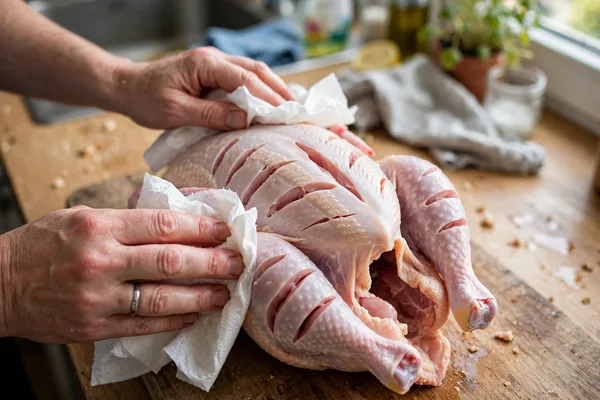
Clean the chicken and pat it completely dry with paper towels. Make 3 deep slashes on each breast and 2 on each thigh. The cuts help the salt reach the deep meat.
Step 2
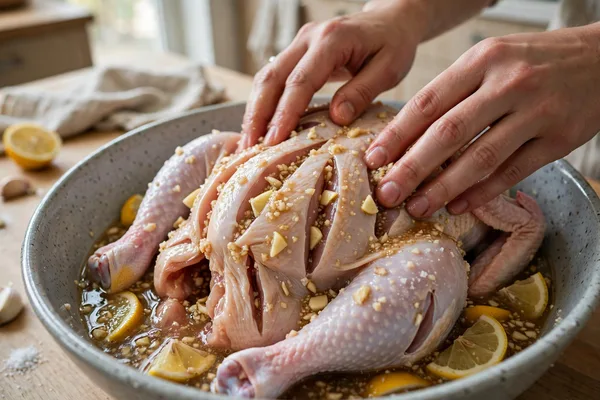
Mix the salt, vinegar, lemon juice, and garlic paste in a small bowl. Rub the mixture all over the chicken, inside the cavity, and into the slashes. Place the chicken in a large bowl, cover, and refrigerate for 4 hours. Overnight gives even deeper flavor.
Step 3
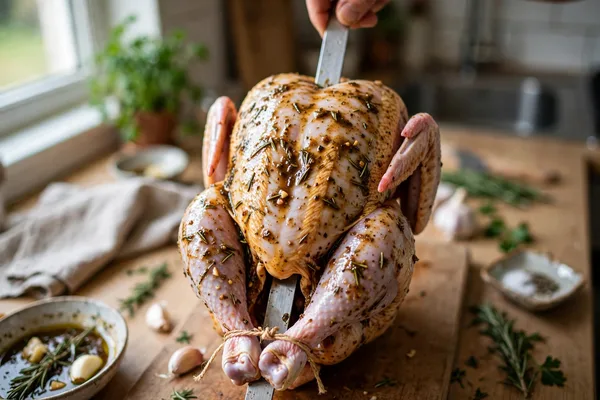
Remove the chicken from the refrigerator 45 minutes before cooking. Pat it dry again. Thread it firmly onto a long flat metal skewer through the center, from the neck end to the tail. Tie the legs together with kitchen twine so the bird holds its shape.
Step 4
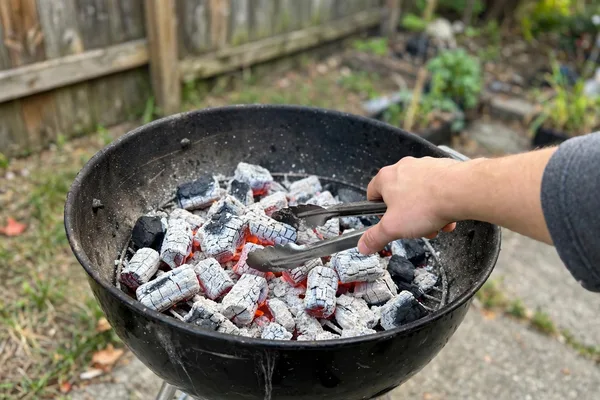
Prepare a charcoal grill for indirect heat. Light the coals and wait until they burn down to glowing embers with a thin layer of white ash, about 30 minutes. Spread the embers so the chicken sits over gentle, even heat, not flames.
Step 5
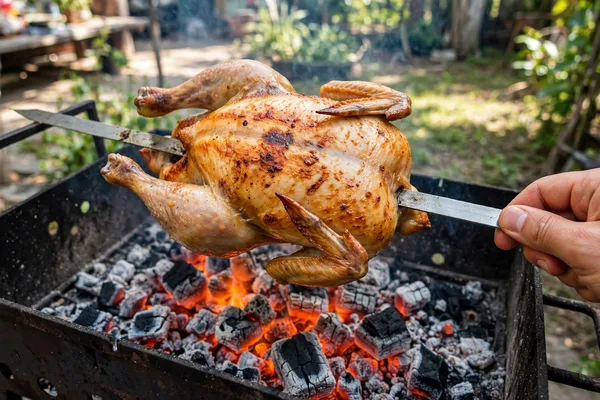
Mount the skewer on the grill so the chicken sits 20 to 25 cm above the embers. Roast with the grill lid on or with a makeshift foil tent. Turn the skewer a quarter turn every 25 to 30 minutes so each side faces the heat evenly.
Step 6
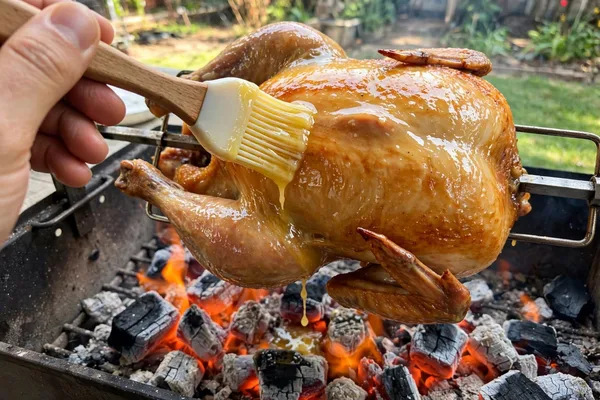
Brush the chicken with oil or melted butter each time you turn it. The basting keeps the skin moist and helps it crisp to a deep golden color.
Step 7
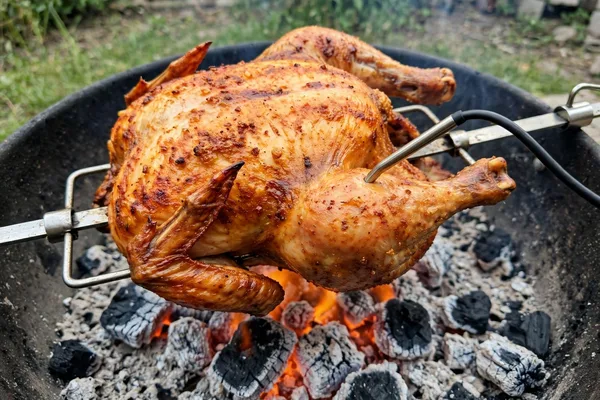
Roast for 3 hours. Check the thickest part of the thigh with a meat thermometer. It must read 75 degrees Celsius. If the skin colors too fast, move the chicken slightly higher above the embers.
Step 8
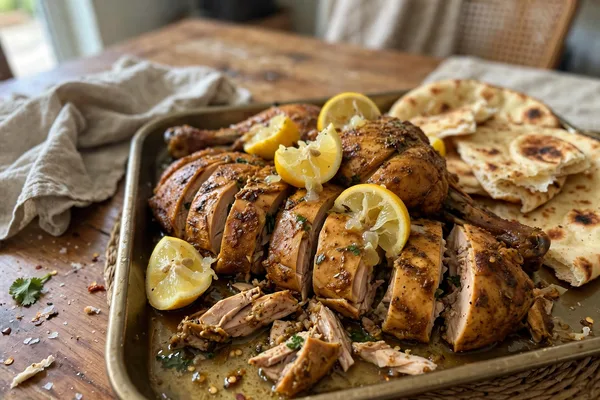
Rest the chicken on a warm tray for 15 minutes before carving. The juices will redistribute through the meat. Cut into serving pieces, squeeze fresh lemon over them, and serve hot with warm kaak bread or naan.
Pro Tips
- Cook over embers, not flames. Flames burn the skin before the inside cooks. White ash covered coals give steady gentle heat.
- Skin on is essential. The skin protects the meat during the long roast and turns crisp and golden.
- Keep the skewer turning on a steady schedule. Uneven rotation causes one side to dry out while the other stays pale.
- A meat thermometer removes all guesswork. The thigh must reach 75 degrees Celsius for safe, juicy meat.
- Save the dripping juices from the resting tray. Pour them over the carved chicken or serve them with rice.
- Choose a bird between 1.5 and 1.8 kilograms. Larger birds dry out before the inside cooks.
- Set a phone alarm for every turn. An alarm every 25 minutes keeps the rotation steady.
- Protein provides 4 calories per gram according to the Atwater system. One serving of sajji delivers about 48 grams of protein.
Nutrition
One serving is estimated to provide about 500 calories. It carries roughly 48 grams of protein, 32 grams of fat, and less than 2 grams of carbohydrates. These values assume a 1.8 kilogram chicken divided into 6 servings. Roasted chicken with skin provides about 27 grams of protein per 100 grams according to USDA FoodData Central. An adult needs around 2000 to 2500 calories per day according to the World Health Organization. One serving covers roughly one quarter of that need.
Note
These values are estimates. Actual numbers change with the weight of the bird.
Troubleshooting
The skin burns before the meat cooks
The coals run too hot. Raise the skewer to 30 centimeters above the embers. Push the coals to the sides. Keep flames away from the skin.
The meat turns out dry
Pull the bird at 75 degrees Celsius in the thigh. Rest it 15 minutes before carving.
Note
Do not skip the rest. Cutting early spills the juices.
FAQs
Can I make sajji in an oven instead of over coals?
Yes. Roast the skewered or trussed chicken at 175 degrees Celsius for 90 to 100 minutes, turning twice and basting with butter. For smoke flavor, heat a piece of charcoal until red hot, place it in a small foil cup beside the chicken, and cover for 5 minutes.
Does the marinade need to be overnight?
No. Four hours is enough for a 1.8 kg chicken. Overnight marinating, up to 12 hours, gives deeper flavor in the breast meat but is not required. Salt moves about 1 centimeter per hour in the cold.
Is sajji spicy?
No. Traditional Balochi sajji is mild. Salt is the main seasoning. Vendors in Quetta often serve a dry spice sprinkle on the side, but the roast itself stays simple and lets the chicken flavor dominate.
Can I use lamb instead of chicken?
Yes. Traditional sajji is often made with a whole lamb leg or ribs. Use the same salt marinade and roast for 4 to 5 hours over embers until the meat pulls easily from the bone.
Can I cook sajji on a gas grill?
Yes. Set the gas grill to low indirect heat, about 160 degrees Celsius. Add a smoker box with wood chips if you want smoke. Roast for 2 to 2.5 hours, turning every 30 minutes, until the thigh reaches 75 degrees Celsius. Keep the chicken on the cool side at low flame.
How do I know the coals are ready?
Wait 30 minutes after lighting. The coals should glow red under white ash.
Conclusion
Balochi sajji proves that restraint creates flavor. Salt, lemon, coals, and time do all the work. Roast it slowly, rest it well, and serve it with warm bread and fresh lemon. The smoky, crisp skin and juicy meat speak for themselves.
Related recipes
BBQ & GrillCrispy Hot Wings