 DessertsBiscoff Kunafa
Pakistani Bakery Cookies
Crisp golden Pakistani bakery cookies with a 50/50 butter-ghee base, sesame topping, and the soft-to-crispy cooling secret.
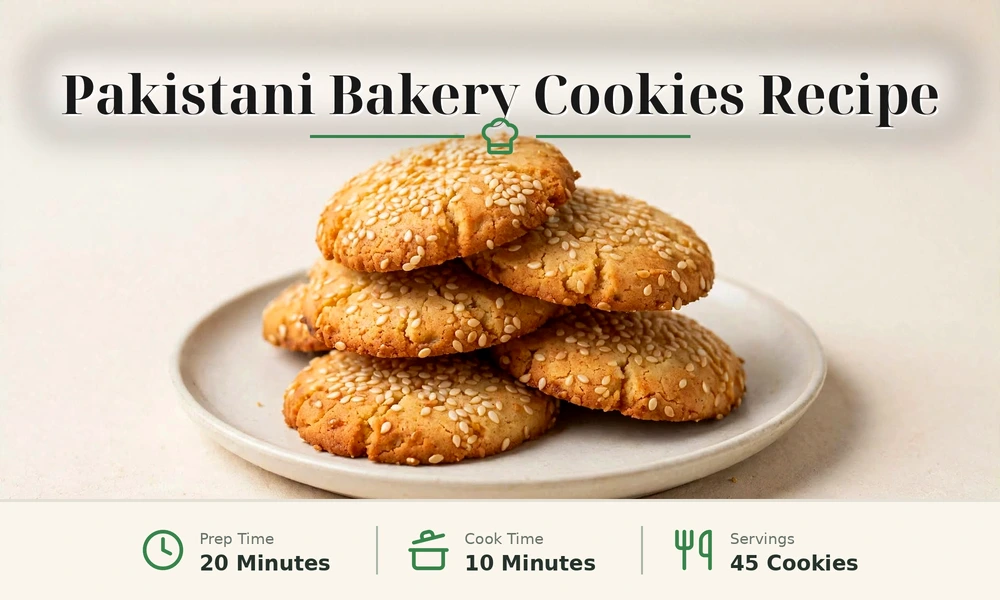
Prep Time:20 minutes
Total Time:about 40 minutes
Servings:about 45 cookies
Allergen warning
This recipe contains: Gluten, Dairy, Egg, Sesame. If you have a food allergy, check every ingredient label before cooking.
On this page
Nan khatai, the beloved ancestor of the modern Pakistani bakery cookie, traces its roots to 16th-century Surat, where Dutch traders established one of India's first commercial bakeries. That crisp, melt-in-the-mouth texture entered South Asian food culture centuries ago and never left. Today, Pakistani bakeries produce millions of these golden cookies every week, from Karachi's crowded market shops to Lahore's neighborhood bakeries. This recipe recreates the exact bakery texture at home with a professional 50/50 butter-ghee blend, icing sugar for a fine crumb, and a sesame seed coating that turns golden in the oven. The method takes under 40 minutes from mixing bowl to cooling rack. Follow the steps below and bake a batch that rivals any commercial bakery.
| Calories | Protein | Carbs | Fat |
|---|---|---|---|
| 175 | 2 g | 19 g | 12 g |
Estimated values per serving. See the Nutrition section below for details.
🧂 Ingredients
- Unsalted butter: 250 grams, softened at room temperature
- Desi ghee: 250 grams, softened at room temperature
- Icing sugar: 300 grams, sifted
- All-purpose flour: 700 grams
- Full-cream milk powder: 4 tablespoons
- Baking powder: 1/2 teaspoon
- Eggs: 3 large, at room temperature
- Vanilla extract: 2 drops
- Lemon oil: 2 drops
- Egg yolk: 1, lightly beaten, for coating
- Sesame seeds: as required (about 3 tablespoons)
Method
Step 1
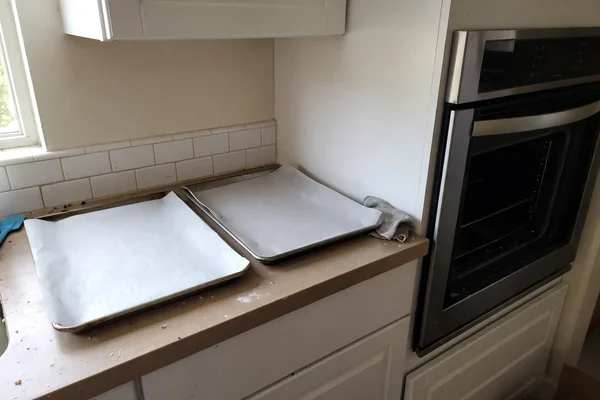
Preheat the oven to 160C (320F). Line two baking trays with parchment paper.
Step 2
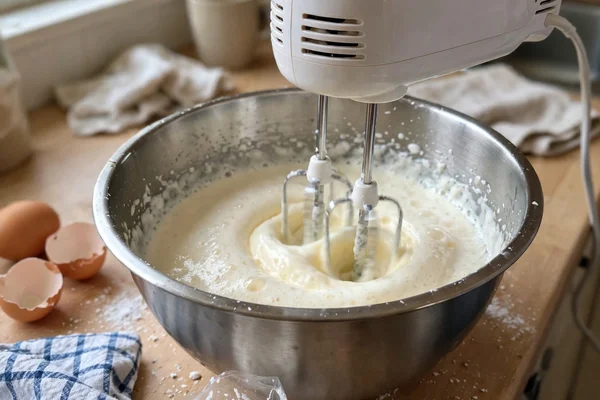
Beat the 3 eggs with the 300 grams of icing sugar in a large bowl. Continue beating until the mixture turns pale and foamy. This aeration lightens the final cookie.
Step 3
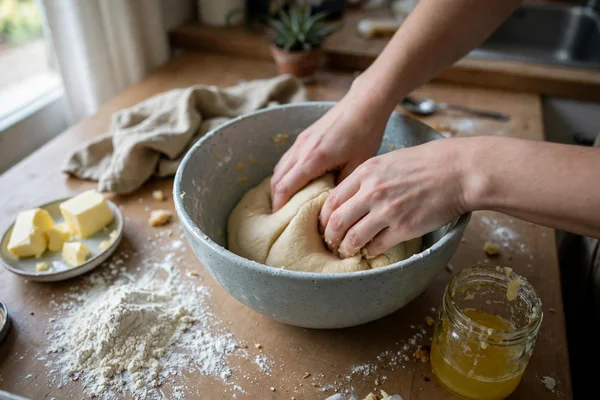
Add the 700 grams of flour, 250 grams of butter, 250 grams of ghee, 4 tablespoons of milk powder, and 1/2 teaspoon of baking powder. Knead everything into a smooth, even dough. Do not overwork it.
Step 4
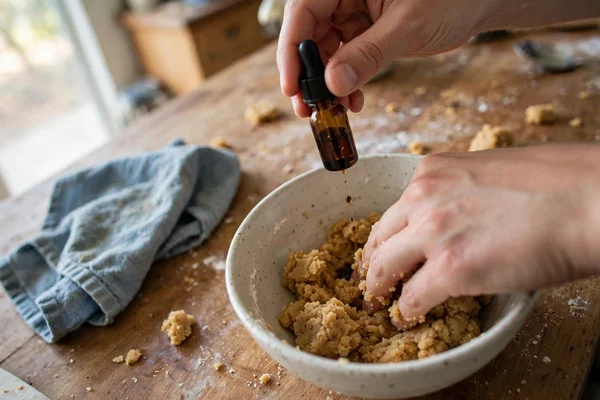
Add the 2 drops of vanilla extract and the 2 drops of lemon oil. Work the dough briefly so the flavourings distribute evenly. This neutral base dough accepts other flavours and colours. Add cocoa powder to a portion of dough for chocolate chip cookies.
Step 5
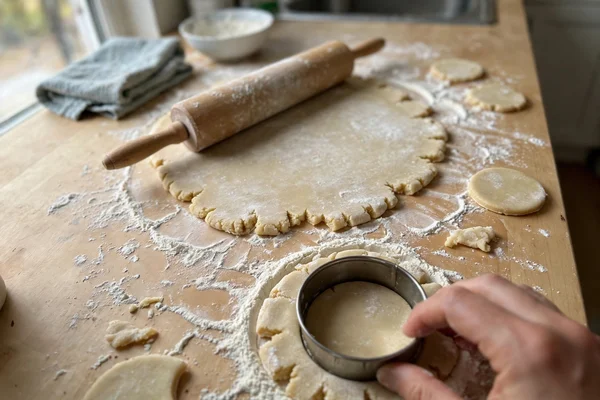
Roll the dough on a lightly floured surface to about 1/2 centimetre thickness. Press shapes with a cookie cutter. Use round or fluted cutters for the classic bakery look. Reroll the scraps once and press more shapes. Place the cut cookies on the prepared trays with 2 centimetres of space between them.
Step 6
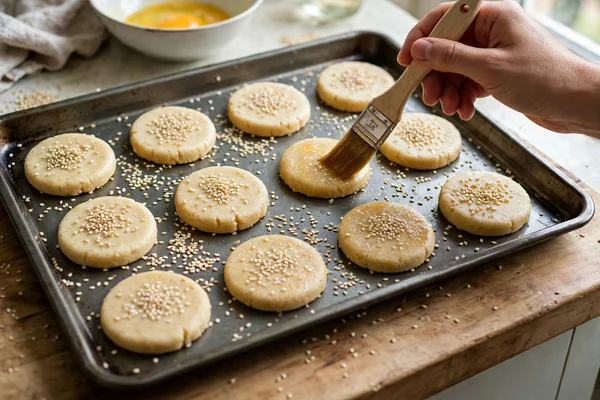
Brush each cookie with the beaten egg yolk. Sprinkle sesame seeds generously over the wet surface. The yolk gives the tops a bakery-style shine.
Step 7
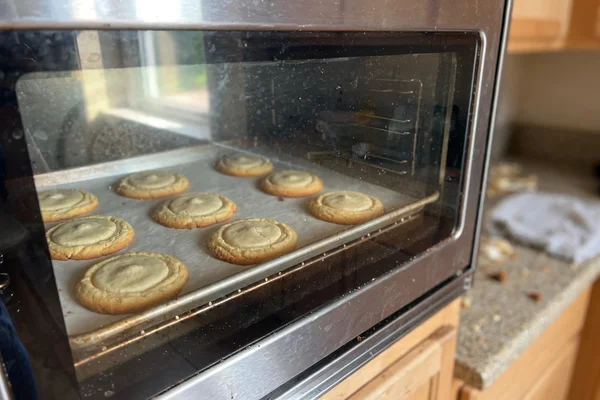
Bake at 160C for 7 to 10 minutes, until the edges turn light golden. The centres may still look pale. That is correct.
Step 8
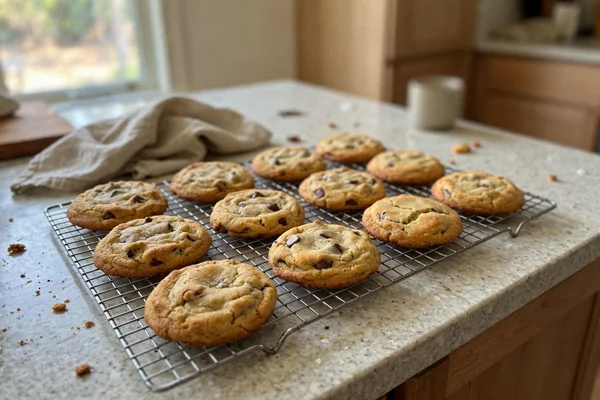
Lift the cookies onto a wire rack. Cool them for a full 15 minutes. They feel soft and slightly soggy straight from the oven, and they turn crisp as they cool. Serve with hot milk or tea.
Pro Tips
- Keep the exact 50/50 ratio of butter to ghee. Butter brings rich flavour. Ghee brings the short, crumbly bakery texture.
- Use icing sugar, not granulated sugar. Icing sugar dissolves completely and gives a fine bakery crumb.
- Weigh the flour and icing sugar for accuracy. Cup measurements vary from cook to cook. A kitchen scale gives consistent dough every time.
- Sift the icing sugar before use. Lumps leave white spots on the baked cookies.
- Do not overbake. Seven to ten minutes at 160C is enough. The cookies continue to firm up on the rack.
- Cool on a wire rack for a full 15 minutes. The soft-to-crisp transformation happens during this rest. Skipping it leaves the centres soggy.
- Brush a thin, even layer of egg yolk. A thick layer browns too fast.
- Store the cooled cookies in an airtight container for up to 10 days.
- Convert the base dough into other flavours. Add 2 tablespoons of cocoa powder for chocolate cookies. Add a few drops of food colour for festive batches.
- Weigh the cut cookies for uniform size. Equal size means equal baking.
- Rotate the tray halfway. Most home ovens have hot spots.
- Fat provides 9 calories per gram according to the Atwater system. Serve these cookies as a treat, not a daily snack.
Nutrition
One cookie from a batch of 45 is estimated to provide about 175 calories. It carries roughly 2 grams of protein, 19 grams of carbohydrates, and 12 grams of fat. The butter and ghee provide most of the fat. The flour and icing sugar provide most of the carbohydrates. One large egg provides about 6 grams of protein according to USDA FoodData Central. An adult needs around 2000 to 2500 calories per day according to the World Health Organization. Four cookies cover one third of that need.
Note
These values are estimates. Cookie size changes the numbers.
Troubleshooting
The cookies spread and lose their shape
The dough was too warm. Chill the cut shapes for 10 minutes before baking. Cold dough holds its shape in the oven.
The bottoms brown before the tops set
Move the tray to the middle rack. Bake one tray at a time.
Note
Do not overbake pale tops. The cookies firm up on the rack.
FAQs
Can I use only butter and skip the ghee?
Yes. The cookies will taste good. But they will lose the classic bakery crumb. Ghee creates the short, melt-in-the-mouth texture that defines Pakistani bakery cookies. Add 1 tablespoon of butter if the dough feels dry.
Can I replace icing sugar with granulated sugar?
No. Granulated sugar leaves a grainy texture. It also spreads the cookies more in the oven. Sifted icing sugar keeps the surface smooth and the crumb fine.
Do soft cookies mean I underbaked them?
No. These cookies always feel soft straight from the oven. Give them 15 minutes on a wire rack. They will turn crisp on their own. Do not add extra baking time. Pale edges need 1 more minute.
Can I make chocolate chip cookies from this dough?
Yes. Add 2 tablespoons of cocoa powder to 500 grams of dough. Fold in 50 grams of chocolate chips. Bake at 160C for 7 to 10 minutes, the same as the plain batch.
Do these cookies stay fresh for a full week?
Yes. They stay fresh for up to 10 days in an airtight container at room temperature. Keep the container away from heat and direct sunlight.
Why did my cookies crack on top?
The dough was too dry, or the oven ran hot. Add 1 tablespoon of milk. Small surface cracks are normal.
Conclusion
These Pakistani bakery cookies bring the neighbourhood bakery to your own kitchen. The 50/50 butter-ghee blend, the icing sugar crumb, and the sesame coating do all the work. Bake one tray today. Watch the cookies turn crisp on the rack. Serve them with tea and enjoy the classic bakery taste at home. Keep a jar on the kitchen shelf for guests. These cookies disappear fast with afternoon tea.