 TroubleshootingWhy your naan does not puff on the tawa (and how to fix it)
Why your jalebi turns soft instead of crispy
Limp jalebi? Get the batter consistency, one-string syrup and 40-second soak rule right for lasting crispness.
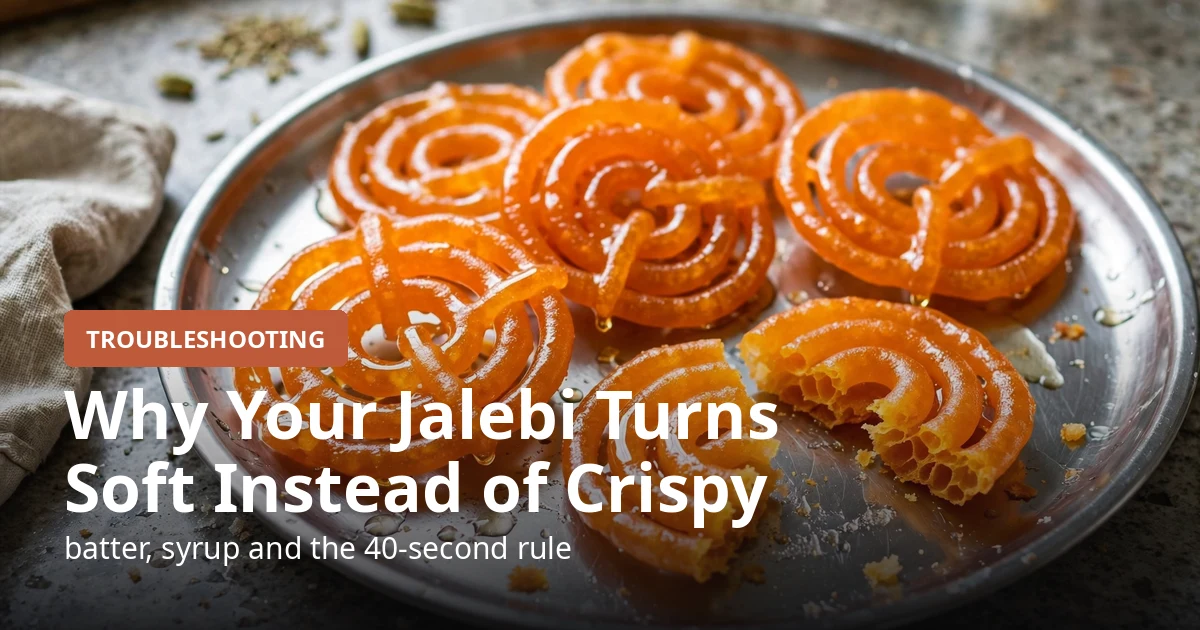

Crisp jalebi shatters between the teeth. Syrup floods out. The contrast makes the sweet famous across South Asia. Home batches often miss it. The spirals emerge soft, limp, and chewy within minutes of the syrup bath. The disappointment stings because the batter looked right and the coils held their shape. Candy science explains the failure precisely. Sugar syrup reaches the thread stage, known as one-string consistency, at 110 to 112°C (230 to 234°F). At that stage the syrup coats the fried batter instead of soaking it. Below that temperature the syrup stays thin. Thin syrup seeps into the crust and kills the crunch. This post maps every cause of soft jalebi to a fix. Continue reading to lock in the crisp.
The problem
Soft jalebi frustrates because the sweet sells a promise of crunch. A proper jalebi cracks audibly, then melts into syrup. The homemade version often turns floppy and doughy. It tastes sweet but texturally flat, closer to a syrupy pancake than a confection. The failure usually appears after the soak. The spirals look crisp leaving the oil. Ten minutes later they sag. Cooks blame the batter or the oil temperature. The syrup causes most failures. A thin syrup penetrates the fried shell instead of glazing it. The crust, built to be delicate and lacy, cannot survive saturation. Fermentation timing adds another trap. Under-fermented batter fries dense. Dense batter cannot hold crispness against any syrup. The cook ends up with a sweet that tastes fine for five minutes and disappoints for the rest of the evening. Fixing jalebi means controlling three things: batter fermentation, fry temperature, and syrup concentration.
Common causes
- The syrup never reaches one-string stage. Cooks pull the syrup off heat too early or add too much water. A thin syrup flows into the fried lattice instead of coating it. The crisp shell turns to mush within minutes.
- Jalebi soaks too long. The standard rule allows 40 seconds in warm syrup, no more. Longer soaks drown the delicate crust. Even perfect syrup ruins jalebi if the spirals sit in it for minutes.
- The batter ferments too little or too much. Under-fermented batter fries thick and bready. Over-fermented batter turns sour and fragile, then collapses in oil. Both lose crunch fast. Ideal fermentation runs 8 to 12 hours at warm room temperature.
- Oil temperature swings during frying. Oil below 170°C makes the coils absorb fat and fry soft. Oil above 190°C browns the outside before the inside sets. The target band is 170 to 180°C for an even, lacy set.
- The batter consistency misses the mark. Runny batter spreads into flat ribbons with no structure. Overly thick batter pipes into ropes that stay doughy inside. The batter should flow in a steady stream and hold the coil shape for 2 seconds.
How to fix it
- Cook the syrup to one-string consistency. Combine 1 cup (200 g) sugar with 1/2 cup (120 ml) water and a squeeze of lemon. Boil to 110-112°C (230-234°F). Test by pressing a drop between thumb and forefinger. It should pull into a single thread 1 to 2 cm long.
- Keep the syrup warm, not hot. Hold it at 50 to 60°C during soaking. Hot syrup thins out and penetrates too deep. Cold syrup will not coat evenly.
- Ferment the batter 8 to 12 hours. Mix 1 cup flour with 2 tablespoons yogurt and 3/4 cup water to a thick paste. Cover and rest at 24 to 27°C. The batter should smell faintly sour and show bubbles before frying.
- Fry at 170 to 180°C. Pipe coils into the oil in quick circular motions. Fry 2 to 3 minutes per side until the orange color sets and the sizzling quiets.
- Soak exactly 40 seconds. Lift the fried coils straight from oil into the warm syrup. Turn once at 20 seconds. Drain on a rack immediately. Never stack hot jalebi.
Pro tips
- Add 1/4 teaspoon baking soda to the fermented batter just before frying. It opens the crumb and boosts crispness.
- Fry a test coil first. Adjust batter thickness or heat based on that single piece.
- Keep finished jalebi uncovered at room temperature. Covering traps steam and softens the crust.
- Re-crisp day-old jalebi in a 180°C oven for 4 minutes.
- Use a squeeze bottle or piping bag with a 3 to 4 mm tip for even coils.
FAQs
Can I fix jalebi that already turned soft?
No. Once syrup saturates the crust, crispness cannot return fully. Reheat soft jalebi in a 180°C oven for 4 to 5 minutes. The heat drives off some moisture and restores partial crunch. Next time, follow the 40-second soak rule.
Does the type of sugar change the syrup stage?
No. White granulated sugar and raw sugar both reach thread stage at 110 to 112°C. Raw sugar darkens the syrup and adds molasses notes. The temperature target stays identical either way.
Why does my batter taste sour but the jalebi still turns soft?
Yes, over-fermentation causes this. Batter fermented past 14 hours turns acidic and weak. The coils fry fragile and collapse in syrup. Ferment 8 to 12 hours at 24 to 27°C, then fry immediately.
Can I make crisp jalebi without fermenting overnight?
Yes. Add 1/2 teaspoon instant yeast and 1/4 teaspoon baking soda to the batter. Rest it 2 hours at 27°C. The texture runs slightly less complex than a slow ferment, but the coils still fry crisp.
Conclusion
Crisp jalebi obeys three numbers: syrup at 110-112°C, fry at 170-180°C, soak for 40 seconds. Hit all three and the spirals shatter the way they should.
Related topics
['TroubleshootingWhy your naan does not puff on the tawa (and how to fix it) ', ' TroubleshootingWhy your samosas break open while frying
 TroubleshootingWhy your seekh kebabs fall off the skewer
TroubleshootingWhy your naan does not puff on the tawa (and how to fix it)TroubleshootingWhy your samosas break open while fryingTroubleshootingWhy your seekh kebabs fall off the skewer
Comments
Comments are saved in your browser only.