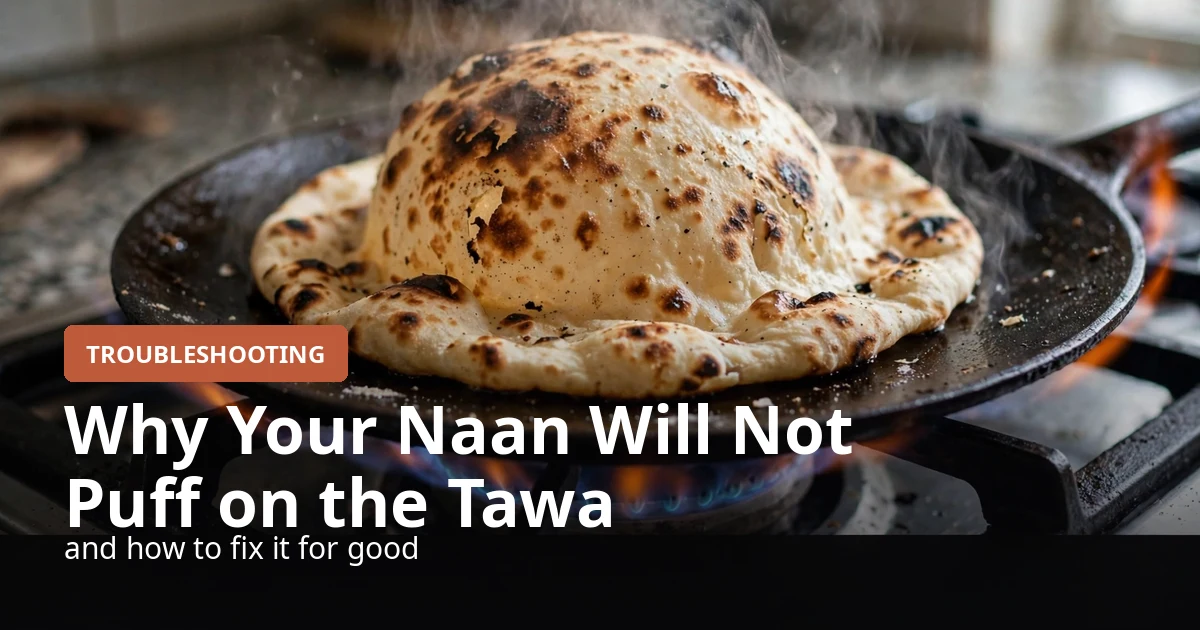
 TroubleshootingWhy your naan does not puff on the tawa (and how to fix it)
How to stop whipped cream from melting in hot weather
Whipped cream melting in 40C heat? These stabilizers and chilling tricks keep cakes and desserts picture-perfect.


Whipped cream holds its shape through a fragile network of fat globules, and that network starts melting around 95 degrees Fahrenheit. A summer afternoon at 104 degrees sits well above that line, which is why piped rosettes slump within an hour on a warm buffet table. The disappointment hits hardest at weddings and birthday parties, where the cake leaves the kitchen perfect and arrives at the venue defeated. Stabilizers change the math. A small amount of gelatin, mascarpone, or instant pudding mix locks water into the foam and holds the structure firm for hours, even in 40-degree heat. This guide covers the stabilizers that survive hot summers, the chilling tricks that buy you time, and the transport rules that protect a finished cake. Keep reading to keep your cream standing tall.
The problem
Plain whipped cream is a warm-weather dessert waiting to fail. The cook whips it to stiff peaks in a cool kitchen, pipes beautiful swirls, and sets the cake out for guests. Within 60 to 90 minutes the peaks soften, the sides weep liquid, and the decorations slide sideways. Outdoor events make it worse: direct sun, warm air, and a crowded table push the cream past its melting point fast. The cook feels helpless because the failure happens in public, in front of everyone the cake was meant to impress. Many bakers switch to non-dairy topping, which holds shape but tastes flat and artificial next to real cream. Others serve the cake straight from the fridge and rush the cutting, which kills the relaxed pace of a celebration. Neither compromise is necessary. Stabilized whipped cream keeps the real dairy flavor and stands firm for 4 to 6 hours at warm room temperature.
Common causes
- Whipping cream with low fat content. Stable foam needs at least 35 percent butterfat. Light cream at 20 to 30 percent whips up but collapses quickly because the fat network stays too thin. Check the carton label and buy heavy whipping cream at 35 to 40 percent fat. In Pakistan and India, look for cream labeled specifically for whipping, not table cream.
- Skipping the chill on every tool. Warm bowls, warm beaters, and room-temperature cream melt the fat before the foam even forms. The structure starts weak and fails early. Chill the mixing bowl and beaters in the freezer for 20 minutes, and keep the cream refrigerated until the second you pour it. Cold tools whip faster and hold longer.
- Under-whipping the cream. Soft peaks look pretty but lack the firm fat network that resists heat. Whip to firm peaks, where the tip of the peak stands straight when you lift the beater. Stop the moment you reach firm peaks, because 30 seconds past that point turns the cream grainy and buttery.
- Using no stabilizer at all. Plain whipped cream relies on fat alone, and fat alone surrenders at 95 degrees Fahrenheit. One teaspoon of gelatin bloomed in 1 tablespoon of cold water per cup of cream raises the melting threshold dramatically. Mascarpone at a ratio of 1 part to 3 parts cream works too, and it adds a rich flavor that suits celebration cakes.
- Leaving the finished cake in a hot car. A parked car in summer reaches 140 degrees Fahrenheit within 30 minutes. No stabilizer survives that. Transport the cake in the coolest part of the car with the air conditioning running, place it on a flat surface, and carry a cooler bag with ice packs for the final stretch from car to venue.
How to fix it
- Chill a metal mixing bowl and the beaters in the freezer for 20 minutes before you start.
- Pour 1 cup of cold heavy cream, 35 percent fat or higher, into the chilled bowl.
- Bloom 1 teaspoon of unflavored gelatin in 1 tablespoon of cold water for 5 minutes.
- Melt the bloomed gelatin in the microwave for 10 seconds, or over a hot water bath, until fully liquid. Let it cool for 2 minutes until barely warm.
- Add 3 tablespoons of powdered sugar and 1 teaspoon of vanilla to the cream.
- Start whipping on medium speed. When soft peaks form, drizzle in the melted gelatin in a thin stream.
- Increase to high speed and whip to firm peaks, where the peak tip stands straight. Stop immediately.
- Frost the cake in a cool room and refrigerate it for at least 2 hours to set the stabilizer.
- For transport, place the boxed cake on the flat floor of an air-conditioned car, never on a tilted seat.
- At the venue, keep the cake away from direct sun and serve within 4 to 6 hours for best shape.
Pro tips
- Use powdered sugar instead of granulated. The cornstarch in powdered sugar adds mild stabilizing power on its own.
- Whip only 1 to 2 cups of cream per batch. Large batches whip unevenly and warm up before they peak.
- For a no-gelatin option, beat 3 tablespoons of mascarpone per cup of cream. The extra fat firms the foam beautifully.
- Pipe decorations onto a chilled cake, not a room-temperature one. Cold cake chills the cream from below.
- Keep a backup piping bag of stabilized cream in a cooler at the venue. You can touch up any softened swirls in seconds.
FAQs
Does stabilized whipped cream taste different?
No. Gelatin is completely tasteless at 1 teaspoon per cup, and the cream tastes exactly the same. Mascarpone adds richness, which most guests prefer.
Can I stabilize cream with cornstarch alone?
Yes. Whisk 1 tablespoon of cornstarch per cup of cream with the powdered sugar before whipping. It holds for about 3 hours in warm weather, less than gelatin but better than nothing.
Will stabilized cream survive an outdoor summer wedding?
Yes, for 4 to 6 hours in shade at up to 104 degrees Fahrenheit. Keep the cake out of direct sun and away from hot serving lamps, and it holds its shape through the event.
Can I re-whip cream that has started to melt?
No. Once melted cream separates, re-whipping produces a grainy texture. Prevent melting with stabilizers and chilling instead of trying to reverse it.
Is Cool Whip better for hot weather than real cream?
Yes, for pure heat resistance. Non-dairy topping holds shape for hours in heat, but it tastes noticeably artificial. Stabilized real cream gives you the flavor of dairy with nearly the same endurance.
Conclusion
Heat melts plain whipped cream because fat alone cannot hold the foam past 95 degrees Fahrenheit. High-fat cream, chilled tools, firm peaks, and one teaspoon of gelatin per cup change the outcome completely. Stabilize, chill, transport cold, and your cake arrives looking exactly the way it left the kitchen.
Related topics
['TroubleshootingWhy your naan does not puff on the tawa (and how to fix it) ', ' TroubleshootingWhy your samosas break open while frying
 TroubleshootingWhy your seekh kebabs fall off the skewer
TroubleshootingWhy your naan does not puff on the tawa (and how to fix it)TroubleshootingWhy your samosas break open while fryingTroubleshootingWhy your seekh kebabs fall off the skewer
Comments
Comments are saved in your browser only.