 TroubleshootingWhy your naan does not puff on the tawa (and how to fix it)
Why your pakoras absorb too much oil (and turn soggy)
Greasy, soggy pakoras? Control batter hydration and oil temperature, and try the double-fry method for lasting crunch.
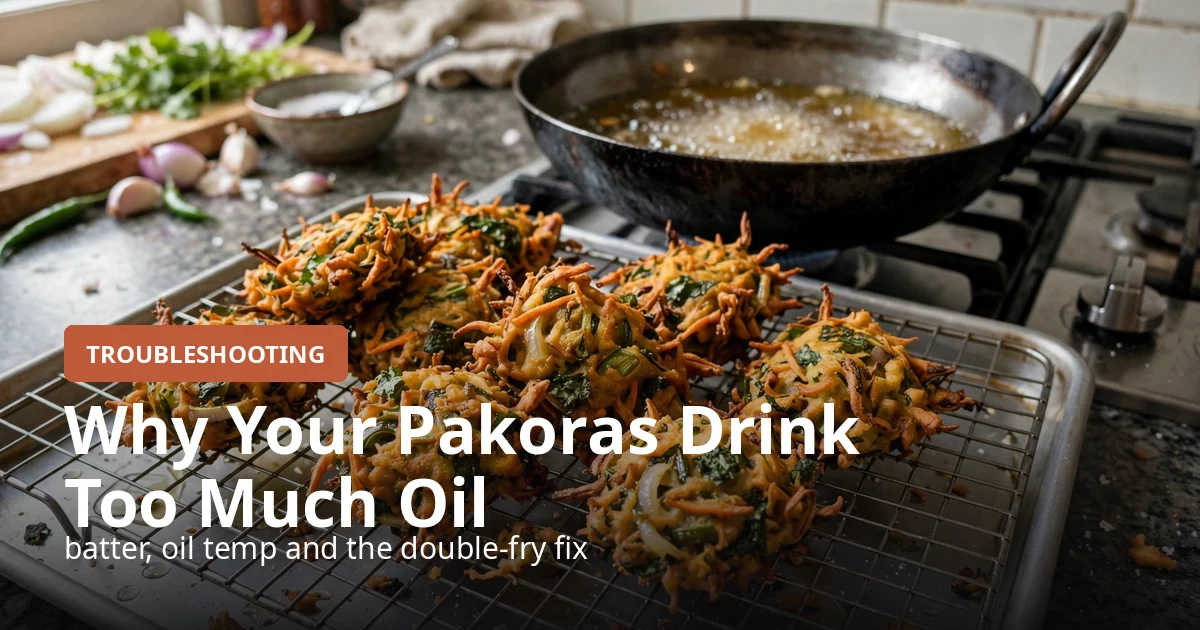
Your pakoras taste perfect at the stall. They taste perfect in your memory. At home, they emerge from the karahi heavy, limp, and shining with grease. Oil pools on the plate within minutes. The crunch dies before the tea cools. Most cooks blame the oil. Food science points elsewhere. Fried foods absorb the bulk of their oil after leaving the fryer, not while submerged. As the crust cools, steam inside condenses into water. The shrinking steam creates a small vacuum. That vacuum drags surface oil deep into the crumb. Temperature control and batter structure decide how much oil gets dragged in. This guide breaks down the exact causes and the fixes. Keep reading to fry pakoras that stay crisp.
The problem
Soggy pakoras disappoint because the dish promises contrast. A pakora should shatter at the edges and stay tender inside. Oil-soaked pakoras feel heavy on the tongue. They leave an oily film on the fingers. They turn the serving plate into a shallow pool within ten minutes. The texture collapses fast. Crispness fades, chewiness takes over, and reheating rarely rescues them. Home cooks feel the frustration most during gatherings. The batter tasted right. The vegetables were fresh. The oil looked hot enough. Yet the batch flops while the halwai down the street fries hundreds that stay crisp for an hour. The difference is not magic and not a secret ingredient. It is heat management, batter hydration, and cooling technique. Three variables decide whether oil stays outside the crust or floods the interior. Once you control them, pakoras come out golden, light, and audibly crisp.
Common causes
- Batter holds too much water. Thin batter drips off the vegetables and leaves a porous, uneven coat. The loose coating cannot seal quickly in hot oil. Steam escapes through the gaps, oil rushes into them during cooling, and the pakora turns greasy.
- Oil temperature runs too low. Oil below 175°C (347°F) cannot set the crust fast enough. The batter sits in the oil and soaks instead of searing. Every batch fried in lukewarm oil drinks far more fat than one fried at full heat.
- The karahi gets overcrowded. Each cold pakora drops the oil temperature by several degrees. A full basket can crash the heat 20 to 30°C in seconds. The crust never firms, and oil seeps through the soft batter.
- Single frying leaves moisture inside. One fry at moderate heat cooks the interior but leaves the crust pale and flexible. The soft shell keeps absorbing oil on the cooling tray. Restaurants avoid this with a two-stage fry.
- Cooling happens on the wrong surface. Paper towels trap steam under the pakoras. A crowded bowl does the same. Trapped steam softens the crust, and the condensing vapor pulls oil inward. The pakoras steam themselves soggy.
How to fix it
- Mix a thick coating batter. Combine 1 cup (120 g) gram flour with 1/2 cup (120 ml) water to start, then add water 1 tablespoon at a time. The batter should coat a spoon and fall in slow ribbons. Rest it 10 to 15 minutes so the flour fully hydrates.
- Heat the oil to 175-180°C (347-356°F). Use a thermometer for accuracy. Without one, drop in a pea-sized bit of batter. It should sizzle hard, sink briefly, then rise within 2 to 3 seconds without browning instantly.
- Fry in small batches. Add 6 to 8 pakoras to a standard karahi at a time. Leave space between pieces. Wait for the oil to return to 175°C before the next batch.
- Use the double-fry method. First fry for 3 to 4 minutes until pale gold and firm. Lift out and rest 2 minutes on a rack. Return to the oil for 60 to 90 seconds until deep golden and crisp.
- Cool on a wire rack, never on paper. Set the rack over a tray in a single layer. Let air circulate underneath for at least 3 minutes. Serve within 15 minutes of frying.
Pro tips
- Whisk 2 tablespoons of hot oil or 2 tablespoons of rice flour into the batter. Both build a crisper, less absorbent shell.
- Keep the flame at medium-high between batches. Oil loses heat fast after each round.
- Salt the vegetables 10 minutes early and squeeze out excess water. Less surface moisture means less steam and less oil uptake.
- Drain each batch 30 to 45 seconds before moving it to the rack. Most surface oil drips off in that window.
- Reheat leftovers in a 200°C (400°F) oven for 5 minutes. The dry heat re-crisps the crust without adding oil.
FAQs
Can I make low-oil pakoras without a thermometer?
Yes. Use the batter-drop test before every batch. The sizzle-and-rise timing tells you the oil sits near 175°C. Keep batches small and the flame steady, and absorption stays low even without instruments.
Does resting the batter really change oil absorption?
Yes. Gram flour needs 10 to 15 minutes to absorb water evenly. Unhydrated flour releases free water in the fryer. That water becomes steam, and steam channels pull oil into the crust. A rested batter seals faster and drinks less.
Why do shop pakoras stay crisp for an hour?
Yes, technique explains it. Shops fry at a steady 175-180°C, never overcrowd the karahi, and cool on open racks. Many use the double-fry method. Copy those three habits and home pakoras hold their crunch far longer.
Can I reuse the frying oil for the next batch?
Yes. Strain it through a fine sieve after it cools. Reuse it 2 to 3 times for frying. Discard it when it turns dark, smells sharp, or smokes below 175°C. Old oil breaks down and increases absorption.
Conclusion
Crisp pakoras come from process, not luck. Thicken the batter, hold the oil at 175-180°C, fry twice, and cool on a rack. Master those four moves and every batch lands golden, light, and crunchy.
Related topics
['TroubleshootingWhy your naan does not puff on the tawa (and how to fix it) ', ' TroubleshootingWhy your samosas break open while frying
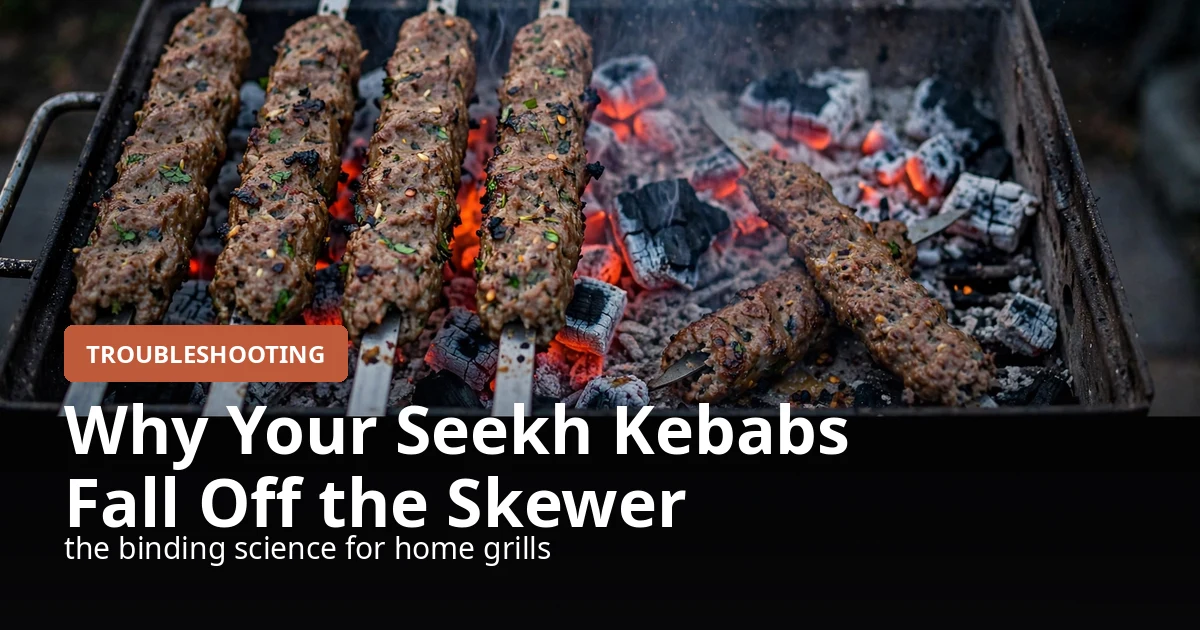 TroubleshootingWhy your seekh kebabs fall off the skewer
TroubleshootingWhy your naan does not puff on the tawa (and how to fix it)TroubleshootingWhy your samosas break open while fryingTroubleshootingWhy your seekh kebabs fall off the skewer
Comments
Comments are saved in your browser only.