 TroubleshootingWhy your naan does not puff on the tawa (and how to fix it)
Why your samosas break open while frying
Samosas bursting in hot oil? This guide diagnoses every fry failure, from cracked seams to soggy shells, with fixes that work.
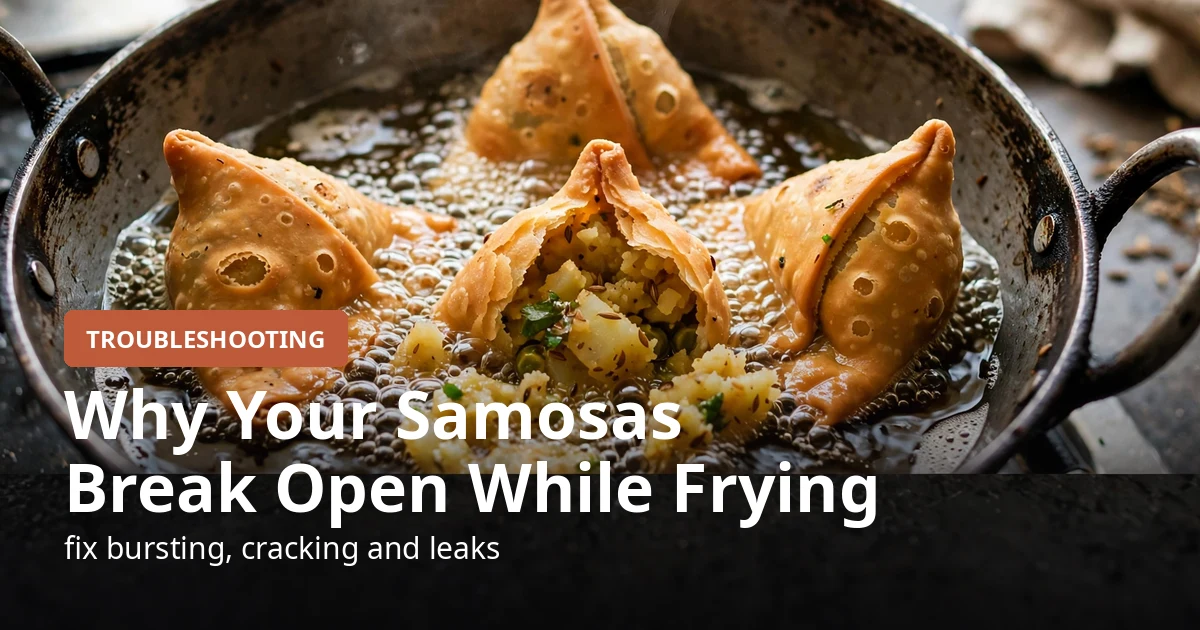
Water expands about 1,600 times in volume when it turns to steam at 100 degrees Celsius. A samosa shell traps moisture from the filling inside a sealed pocket. When that pocket hits hot oil, the trapped water flashes to steam and multiplies its volume 1,600 times. A weak seam cannot hold that pressure. The seam bursts, the filling leaks, and the oil turns cloudy. Home cooks face this failure often because samosa assembly looks easy. The fold takes seconds. The seal takes skill. Keep reading to learn how to build a samosa that survives the karahi.
The problem
You lower three perfect triangles into bubbling oil. They turn golden. Then one seam splits with a hiss. Potato filling spills into the oil. The oil foams and darkens. The broken samosa drinks oil through the tear and turns soggy. You fish out the rest early, and they taste undercooked. This failure wastes oil, filling, and time. It frustrates cooks because the samosas looked sealed. The edges felt pressed. The shape held before frying. The problem hides inside the seal and the filling moisture. Steam pressure finds every weak point. This guide shows you how to close those points.
Common causes
- A weak flour paste seal. Plain water does not glue dough. It evaporates in the hot oil and the seam opens. You need a thick slurry of 30 grams of flour mixed with 45 milliliters of water. The paste should look like toothpaste. Thin paste fails.
- Wet filling. Hot filling releases steam inside the shell after sealing. Boiled potatoes, peas, and corn all release water as they cool. Spread the cooked filling on a tray and cool it for 30 minutes. Drain any liquid before assembling.
- Trapped air pockets. Air expands fast in hot oil. A bubble of air behind the filling pushes against the seam. Press the filling firmly into the cone. Squeeze out air as you press the edges together.
- Oil that is too hot. Above 180 degrees Celsius, the shell sets hard before steam escapes gently. Pressure builds behind the rigid crust and bursts the seam. Keep the oil at 160 to 170 degrees. The crust should brown slowly over 6 to 8 minutes.
- Overcrowding the karahi. Too many samosas drop the oil temperature at once. The shells soak oil instead of crisping. Steam builds slowly inside the soggy shell and splits it. Fry 3 to 4 samosas at a time.
- Uneven dough thickness. Dough rolled thinner than 2 millimeters tears under pressure. Dough thicker than 3 millimeters stays raw inside while the outside browns. Roll every patti to an even 2 to 3 millimeters.
How to fix it
- Make the sealing slurry first. Mix 30 grams of all purpose flour with 45 milliliters of water. Stir until it reaches a toothpaste consistency.
- Cook the filling completely. Spread it on a wide tray. Cool it for 30 minutes until it reaches room temperature. Pour off any collected liquid.
- Roll each dough patti to 2 to 3 millimeters thick. Cut and form the cone. Add 2 tablespoons of filling. Press the filling down firmly to remove air.
- Paint slurry along both edges of the opening. Press the edges together over a 5 millimeter border. Fold the border over once more and press again for a double seal.
- Rest the assembled samosas for 15 to 20 minutes. The seal dries and strengthens during the rest.
- Heat the oil to 160 to 170 degrees Celsius. Test with a small piece of dough. It should sink, then rise slowly within 4 to 5 seconds.
- Fry 3 to 4 samosas at a time for 6 to 8 minutes. Turn them twice. Lift them out when they turn deep golden.
Pro tips
- Freeze the sealed samosas for 20 minutes before frying. A firm cold shell resists bursts.
- Keep the oil at least 7 to 8 centimeters deep. The samosas should float freely without touching the bottom.
- Never pierce a samosa to check doneness. The hole becomes a leak.
- Add 1 teaspoon of ajwain per 500 grams of flour for the classic blistered crust.
- Strain the oil after any burst batch. Burnt filling bits spoil the next round.
FAQs
Can I seal samosas with water only?
No. Water evaporates in hot oil and the seam opens. A thick flour slurry is the only reliable home seal.
Why do my samosas turn out oily and soggy?
The oil temperature dropped below 150 degrees. Cool oil soaks into the shell instead of crisping it. Keep the oil at 160 to 170 degrees and fry small batches.
Can I bake samosas instead to avoid bursting?
Yes. Brush the samosas with oil and bake at 200 degrees Celsius for 20 to 25 minutes. The texture stays drier and less crisp than fried, but nothing bursts.
Should the filling be hot when I assemble the samosas?
No. Hot filling releases steam inside the sealed shell. Cool the filling to room temperature before assembly.
Conclusion
A samosa survives frying when the seal is strong and the filling is dry. Use thick slurry, cool the filling, and hold the oil at 160 to 170 degrees. The next batch will stay sealed, crisp, and golden.
Related topics
['TroubleshootingWhy your naan does not puff on the tawa (and how to fix it) ', ' TroubleshootingWhy your seekh kebabs fall off the skewer
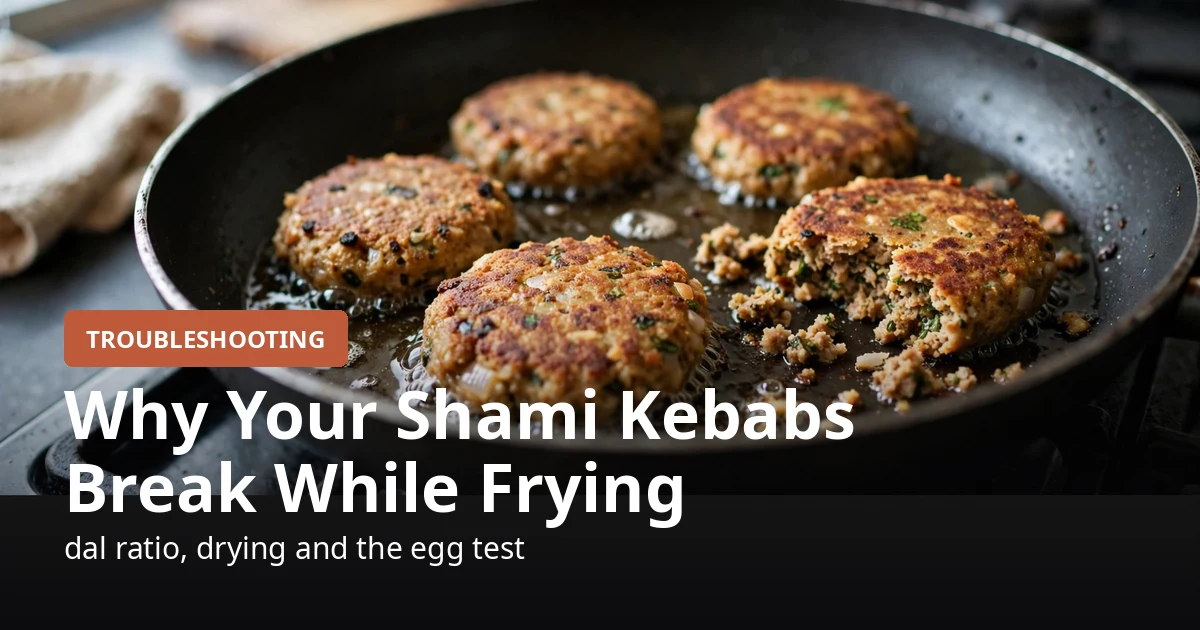 TroubleshootingWhy your shami kebabs break while frying
TroubleshootingWhy your naan does not puff on the tawa (and how to fix it)TroubleshootingWhy your seekh kebabs fall off the skewerTroubleshootingWhy your shami kebabs break while frying
Comments
Comments are saved in your browser only.