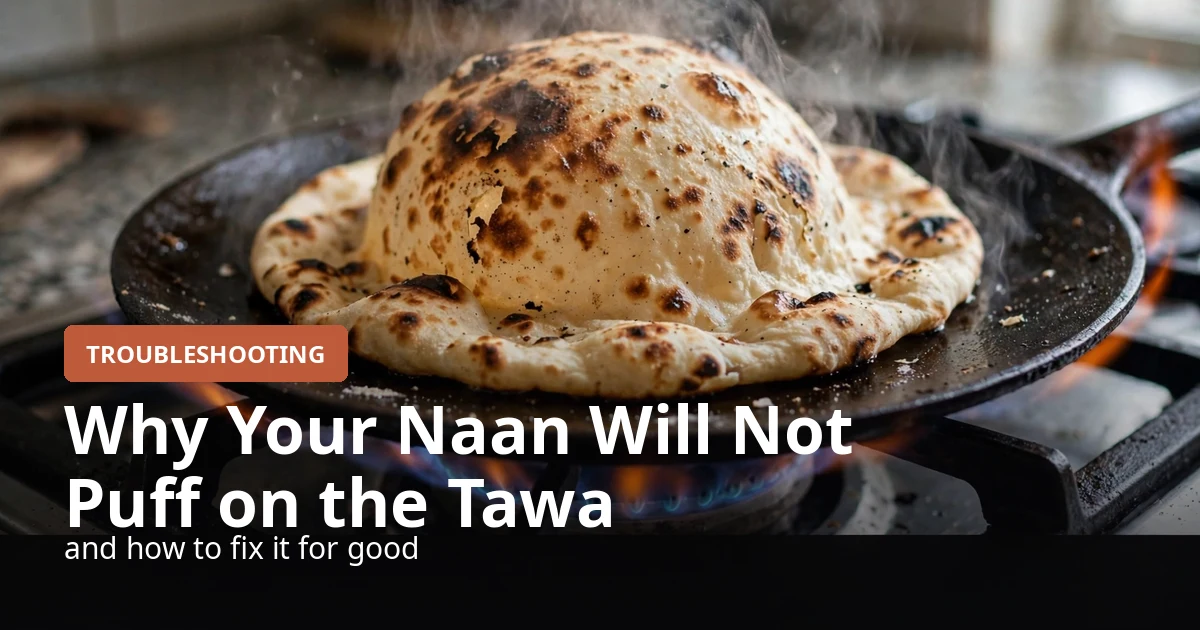
 TroubleshootingWhy your naan does not puff on the tawa (and how to fix it)
Why your gulab jamuns crack while frying (or turn hard inside)
Cracked gulab jamuns or hard centers? Follow this diagnostic flow covering dough moisture, oil temperature and syrup timing.
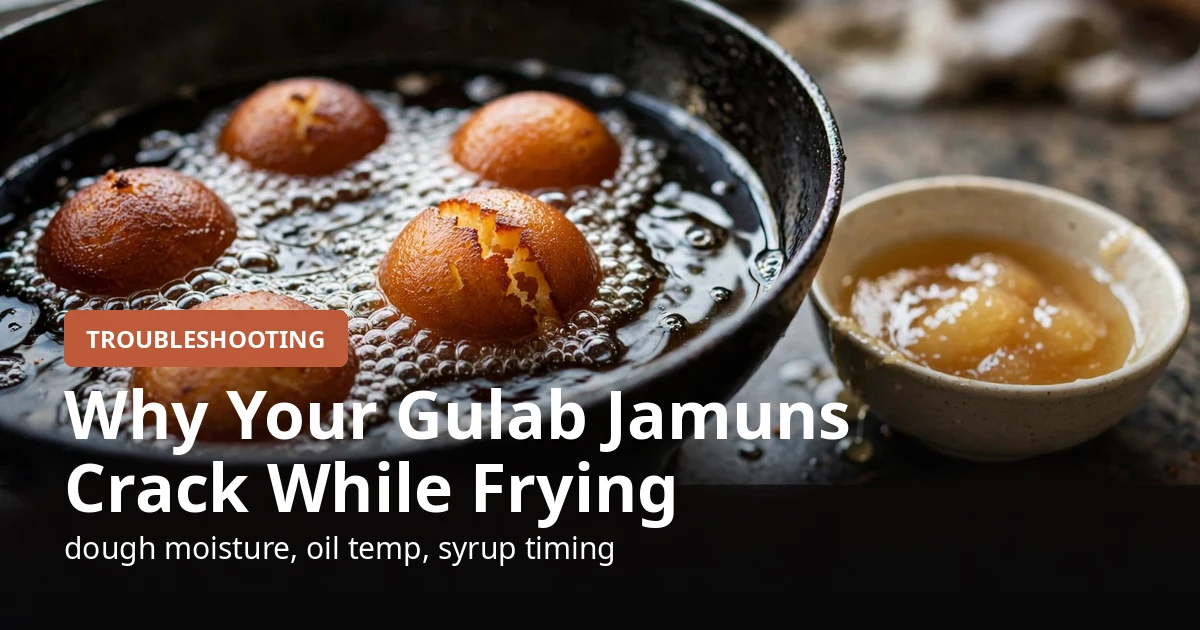
Most fried foods cook at 170 to 180 degrees Celsius. Gulab jamuns need only 140 to 150 degrees. At higher heat, the outside sets into a hard shell within seconds. The inside never cooks and stays dense and dry. At the right low temperature, the ball cooks through slowly and stays soft to the center. Cracked surfaces come from dry dough. Hard centers come from hot oil. Poor syrup soaking comes from cold syrup. Keep reading for the full diagnostic flow.
The problem
You roll smooth balls and lower them into oil. Cracks spider across the surface. Some balls split wide open. The survivors look fine until you bite in. The center is hard and dry. The syrup never reached it. You followed the recipe, but the jamuns failed twice in one batch. This double failure confuses cooks. Cracks suggest one problem. Hard centers suggest another. Both strike together when dough moisture and oil temperature go wrong at once. The fix needs a sequence: soft dough, low oil, warm syrup. Get the order right and every ball turns soft.
Common causes
- Dry dough. Too much flour or too little milk makes a stiff dough. Stiff dough cracks the moment you roll it. Those cracks widen in hot oil. The dough should feel soft like playdough. If a rolled ball shows lines, add milk 1 teaspoon at a time.
- Oil that is too hot. Above 160 degrees Celsius, the surface seals into a shell in seconds. The shell blocks heat from reaching the center. The center stays raw and hard. Keep the oil at 140 to 150 degrees. A test piece should sink, then rise slowly over 8 to 10 seconds.
- Rushing the fry. Gulab jamuns need 8 to 10 minutes of slow frying. The heat needs time to travel to the center. Pulling them out at 5 minutes leaves a raw core. Brown color is not the doneness signal. Time is the signal.
- Cold or thin syrup. Syrup must be warm, at 50 to 60 degrees, and at one string consistency, which forms at 105 to 108 degrees. Cold syrup cannot penetrate the fried ball. Thin syrup makes the jamun soggy without sweetening the center. Keep the syrup warm while the jamuns fry.
- Overcrowding the kadhai. Too many balls drop the oil temperature unevenly. Some balls sit in cool oil and absorb grease. Others sit in hot spots and burn. Fry 6 to 8 balls at a time for even heat.
- Too much or old leavening. More than a quarter teaspoon of baking soda per 250 grams of mix cracks the surface. Old soda reacts unevenly and creates weak spots. Measure carefully and check the expiry date.
How to fix it
- Mix 250 grams of jamun mix, or 200 grams of khoa with 50 grams of flour, with warm milk. Add the milk 1 tablespoon at a time. Stop when the dough feels soft and smooth. Cover and rest it for 10 minutes.
- Grease your palms lightly. Roll 25 to 30 gram balls with no surface cracks. If a ball cracks, add a drop of milk and roll it again.
- Heat oil or ghee to 140 to 150 degrees Celsius. Test with a small piece of dough. It should sink to the bottom, then rise slowly over 8 to 10 seconds.
- Fry 6 to 8 balls at a time for 8 to 10 minutes. Stir gently and continuously. Lift them out when they turn a deep golden brown.
- Prepare the syrup in advance. Boil 400 grams of sugar with 400 milliliters of water to one string consistency. Hold the syrup warm at 50 to 60 degrees.
- Transfer the hot jamuns directly from the oil into the warm syrup. Do not let them cool first.
- Soak for a minimum of 2 hours. Overnight soaking gives the softest centers.
Pro tips
- Cover the resting dough with a damp cloth. A dry skin on the dough causes surface cracks.
- Use a heavy kadhai. Thick metal holds a stable low temperature.
- Add half a teaspoon of cardamom and 1 teaspoon of rose water to the syrup off the heat.
- If the jamuns brown in under 5 minutes, the oil is too hot. Let it cool before the next batch.
- Never refrigerate jamuns before soaking. Cold balls resist syrup absorption.
FAQs
Can I make gulab jamuns in an air fryer?
No. An air fryer dries the surface before the center cooks. The low temperature oil bath is what keeps the texture soft throughout.
Why did my jamuns dissolve in the oil?
The dough was too wet, or the oil was too cool, below 130 degrees. Add a spoon of flour to firm the dough and bring the oil to 140 to 150 degrees.
Should the syrup be hot when the jamuns go in?
Warm, not boiling. Hold the syrup at 50 to 60 degrees. That warmth lets syrup absorb fully without cooking the surface further.
Can I reuse the frying oil?
Yes. Strain out the browned bits and store the oil. A ghee and oil mix keeps for 2 to 3 weeks refrigerated.
Conclusion
Soft gulab jamuns come from three controls: moist crack free dough, oil at 140 to 150 degrees, and warm one string syrup. Run the sequence in order. The next batch will fry smooth, soak fully, and stay soft to the center.
Related topics
['TroubleshootingWhy your naan does not puff on the tawa (and how to fix it) ', ' TroubleshootingWhy your samosas break open while frying
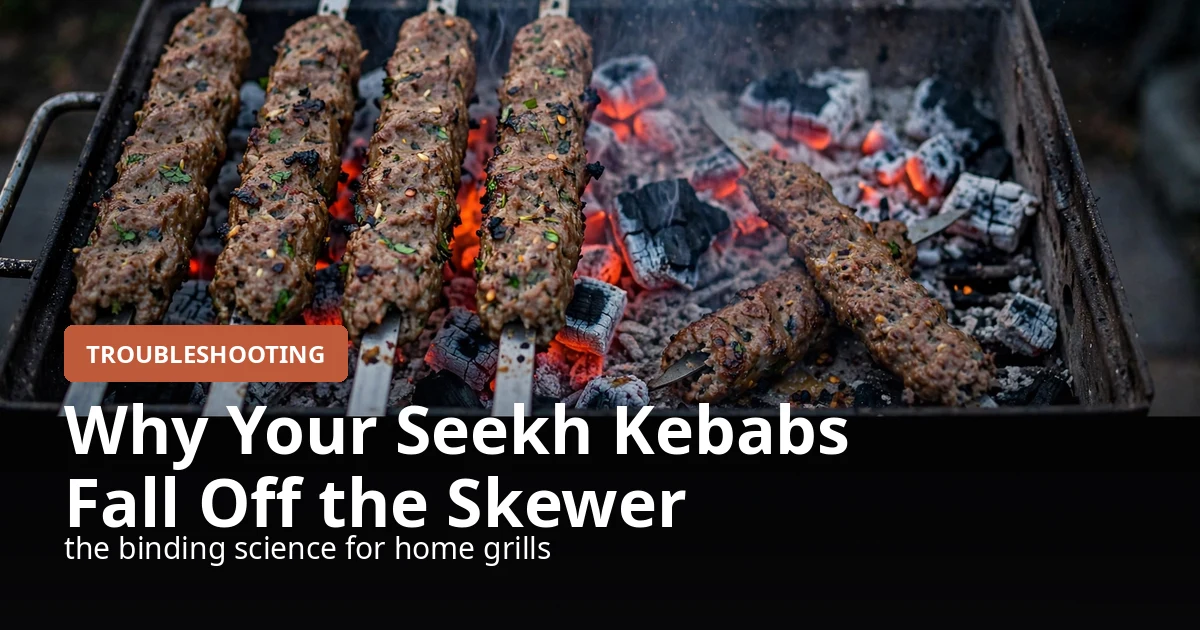 TroubleshootingWhy your seekh kebabs fall off the skewer
TroubleshootingWhy your naan does not puff on the tawa (and how to fix it)TroubleshootingWhy your samosas break open while fryingTroubleshootingWhy your seekh kebabs fall off the skewer
Comments
Comments are saved in your browser only.