 DessertsBiscoff Kunafa
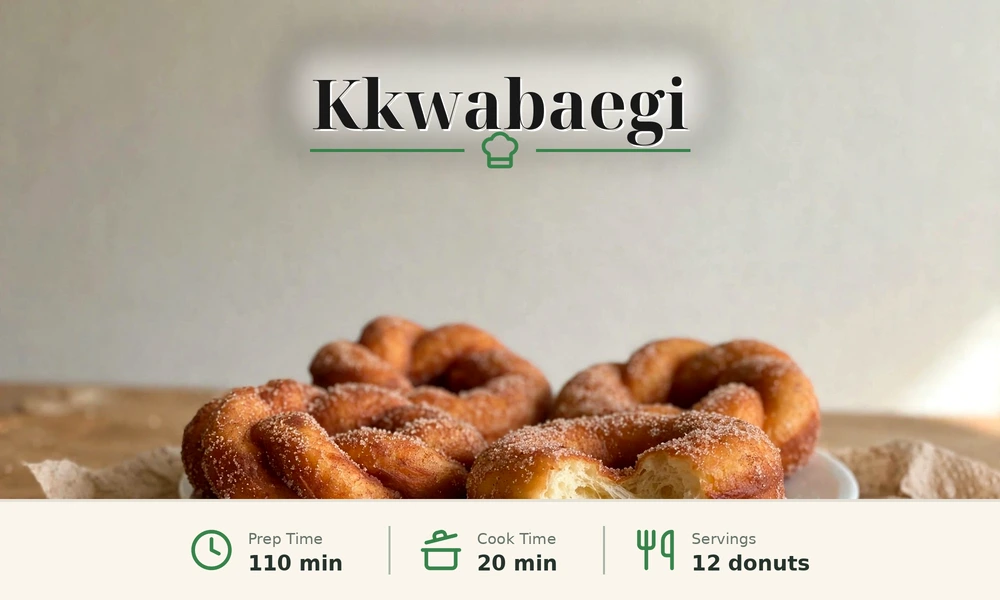
Kkwabaegi (Korean Twisted Donuts)
Twisted Korean donuts — chewy, sugary street-food favorite.
Prep Time:20 minutes
Total Time:130 minutes
Servings:12 donuts
Allergen warning
This recipe contains: Gluten, Dairy, Egg. If you have a food allergy, check every ingredient label before cooking.
On this page
Korean street markets sell food that eats like a warm hug. Kkwabaegi stands at the front of that tradition. Vendors twist ropes of yeasted dough into spiral ropes, drop them into hot oil, and roll the golden donuts through cinnamon sugar. Customers eat them standing at the cart, still steaming. The name kkwabaegi describes the twisted shape itself. Inside, the crumb stays soft and stretchy from the yeast. Outside, the fry creates a crisp shell that holds the cinnamon sugar. This recipe recreates the street-cart version at home with standard kitchen equipment.
| Calories | Protein | Carbs | Fat |
|---|---|---|---|
| 190 | 4 g | 35 g | 4 g |
Estimated values per serving. See the Nutrition section below for details.
🧂 Ingredients
For the Dough
- 300 g bread flour (2 1/2 cups)
- 50 g granulated sugar (4 tablespoons)
- 6 g instant dry yeast (1 1/2 teaspoons)
- 6 g fine salt (1 teaspoon)
- 120 ml warm whole milk (40 degrees Celsius)
- 1 large egg, room temperature (50 g)
- 40 g unsalted butter, softened (3 tablespoons)
For Frying
- 750 ml neutral frying oil (canola or vegetable)
For the Cinnamon Sugar Coating
- 80 g granulated sugar (6 tablespoons)
- 1 teaspoon ground cinnamon
Method
Step 1: Activate the yeast
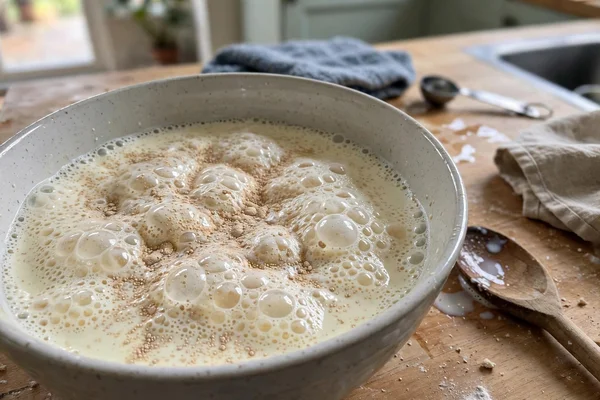
Pour the warm milk into a large mixing bowl. Sprinkle the yeast over the milk. Add 1 teaspoon of the measured sugar. Stir gently. Rest the mixture for 5 minutes. The surface should foam. Foam confirms the yeast is alive.
Step 2: Mix the dough
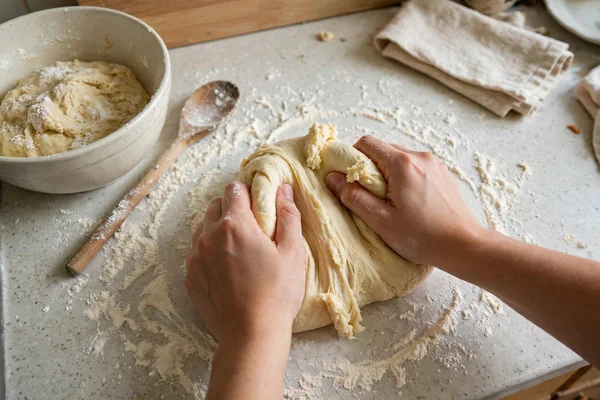
Add the bread flour, remaining sugar, and salt to the bowl. Add the egg. Stir with a wooden spoon until a rough dough forms. Add the softened butter in small pieces. Knead by hand on a lightly floured surface for 10 minutes. The dough turns smooth and elastic. It should stretch without tearing when pulled.
Step 3: First proof
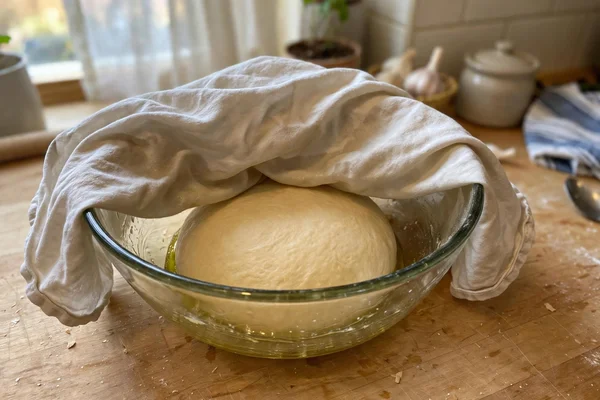
Place the dough in a lightly oiled bowl. Cover with plastic wrap or a damp cloth. Set it in a warm spot at 27 degrees Celsius. Proof for 60 minutes. The dough should double in size.
Step 4: Divide and shape ropes
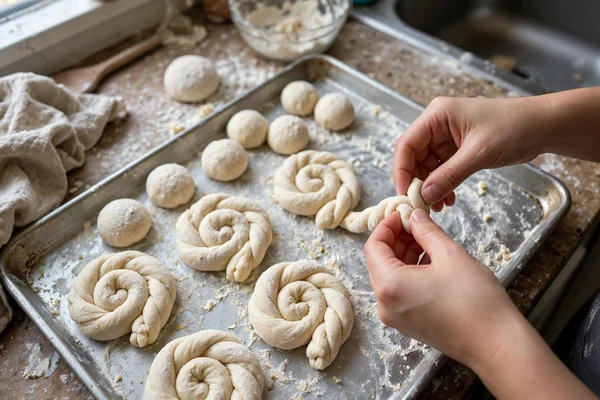
Punch the dough down gently. Divide it into 12 equal pieces of 45 g each. Roll each piece into a ball. Rest the balls for 5 minutes. Roll each ball into a rope 25 cm long. Roll the rope tighter from one end to build twist tension. Hold one end firmly. Twist the other end in one direction. Lift both ends. The rope winds into a natural spiral. Pinch the ends closed. Repeat with all 12 pieces.
Step 5: Second proof
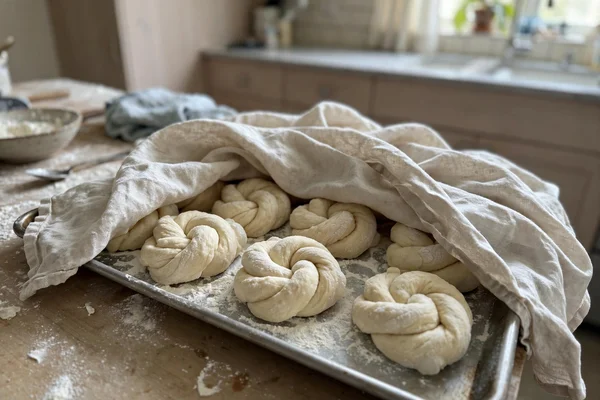
Place the twisted donuts on a floured tray. Leave 5 cm of space between them. Cover with a cloth. Proof for 30 minutes. The donuts puff visibly. They should spring back slowly when pressed.
Step 6: Fry the donuts
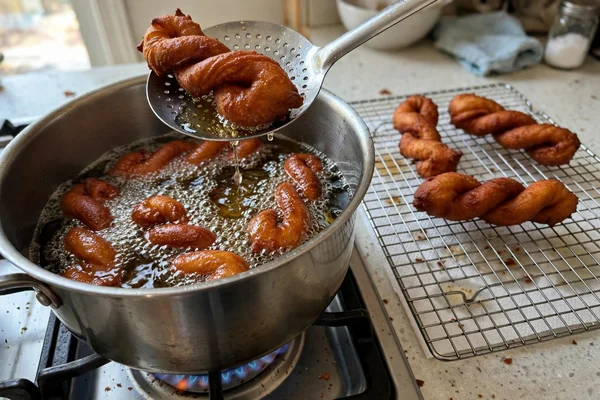
Heat the oil in a deep pot to 170 degrees Celsius. Use a thermometer. Drop in 3 donuts at a time. Fry for 90 seconds. Flip each donut. Fry the second side for 90 seconds. The donuts turn deep golden. Lift them out with a slotted spoon. Drain on a wire rack for 1 minute. Repeat in batches. Adjust the heat between batches to hold 170 degrees Celsius.
Step 7: Coat with cinnamon sugar
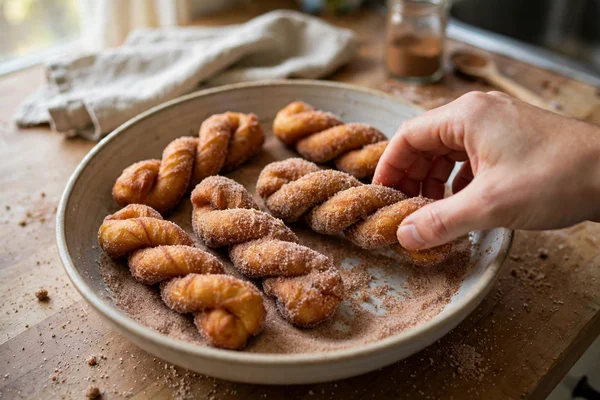
Mix the sugar and cinnamon in a wide shallow bowl. Roll each donut through the mixture while still warm. Warm donuts grab the sugar. Coat every twist and crevice. Serve within 30 minutes for the best texture.
Pro Tips
- Weigh the flour for accuracy. Scoop-measuring varies by up to 30 g.
- Keep the milk at 40 degrees Celsius. Hotter milk kills the yeast. Cooler milk slows activation.
- Build real twist tension in the ropes. Loose twists unwind in the hot oil.
- Maintain 170 degrees Celsius oil. Cooler oil produces greasy donuts. Hotter oil burns the sugar coating later.
- Fry only 3 donuts per batch. Crowding drops the oil temperature by 15 degrees.
- Coat the donuts within 2 minutes of frying. Sugar adheres best to warm oil residue.
- Proof near 27 degrees Celsius.
- Drain on a wire rack. Paper towels trap steam and soften the crust.
- Fat provides 9 calories per gram according to the Atwater system. Two donuts carry about 380 calories.
Nutrition
One donut is estimated at about 190 calories. It carries roughly 4 grams of protein, 35 grams of carbohydrates, 4 grams of fat. One tablespoon of frying oil provides about 120 calories according to USDA FoodData Central. An adult needs around 2000 to 2500 calories per day according to the World Health Organization. Two donuts cover about one sixth of that need.
Note
These values are estimates. Hotter oil means less absorption.
Troubleshooting
The donuts turn out greasy
The oil was too cool. Hold 170 degrees Celsius. Cool oil soaks into the dough.
The twist unwinds in the oil
The rope lacked tension. Twist firmly and pinch both ends closed.
Note
Fry only 3 donuts per batch. Crowding drops the oil temperature fast.
FAQs
Can I use all-purpose flour instead of bread flour?
Yes. All-purpose flour works, but the texture changes slightly. Bread flour contains more protein. That protein creates the stretchy, chewy crumb of street-style kkwabaegi. All-purpose flour produces a softer, more cake-like donut.
Why did my donuts unwind during frying?
The ropes lacked twist tension before the second proof. Roll each rope tightly and twist firmly. Pinch both ends closed. If a donut starts unwinding, the twist was too loose. Rest the shaped donuts the full 30 minutes.
Can I bake kkwabaegi instead of frying?
Yes, but the result differs from the classic. Bake at 180 degrees Celsius for 15 minutes until golden. Brush the baked donuts with 20 g of melted butter. Roll them in cinnamon sugar. The crumb stays good, but the crisp shell comes only from frying. Brush with melted butter twice. Baked donuts dry out faster than fried ones.
How do I store leftover kkwabaegi?
Yes. Store cooled donuts in an airtight container at room temperature for 1 day. Refresh them in an air fryer at 150 degrees Celsius for 3 minutes. Roll in fresh cinnamon sugar. Do not refrigerate. Cold storage makes the crumb tough.
Can I fill kkwabaegi with Nutella or cheese?
Yes. Flatten a 45 g dough piece into a disc. Place 1 tablespoon of Nutella or a 20 g piece of string cheese in the center. Seal the edges completely. Shape into a ball instead of a twist. Fry at 170 degrees Celsius for 2 minutes per side.
Can I make the dough the night before?
Yes. Proof once, then refrigerate overnight in an oiled bowl. Shape and proof 45 minutes the next day.
Conclusion
Kkwabaegi proves that simple ingredients create extraordinary results. Flour, milk, yeast, and sugar transform into crisp twisted donuts through proofing, shaping, and careful frying. The cinnamon sugar coating delivers the street-cart finish. Make them fresh, eat them warm, and the batch will disappear fast.