 DessertsBiscoff Kunafa
Mango Sago
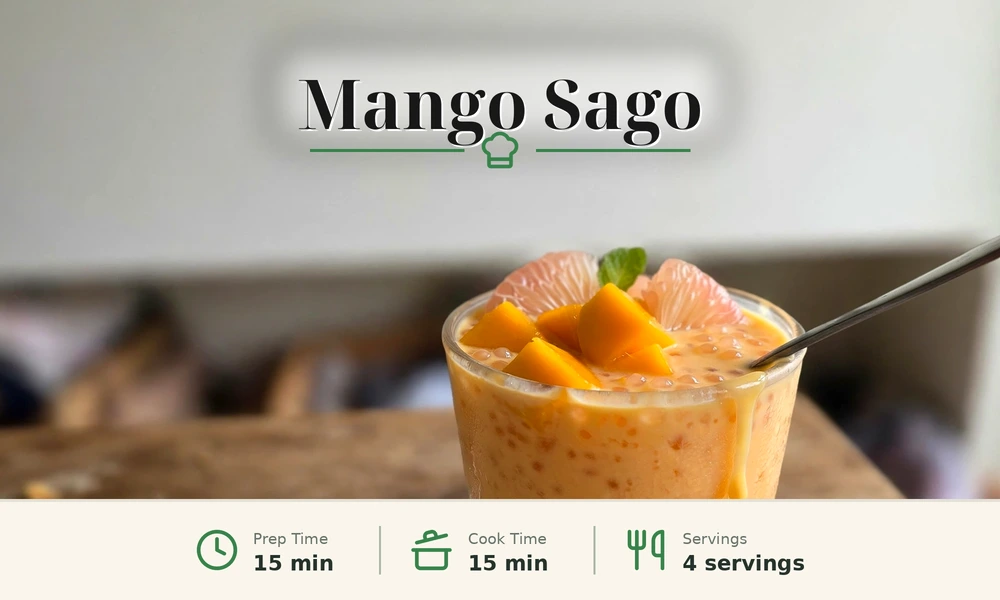
Creamy mango sago pudding with coconut milk and tapioca pearls.
Prep Time:15 minutes
Total Time:90 minutes
Servings:4
Allergen warning
This recipe contains: Dairy. If you have a food allergy, check every ingredient label before cooking.
On this page
Mango sago was invented in a Hong Kong restaurant kitchen, not in a home. In the mid-1980s, the head chef of Lei Garden created a chilled coconut milk dessert with tapioca pearls and fresh mango for a Singapore branch. The dessert combined Cantonese dessert-shop technique with tropical fruit. It spread from that single restaurant across Hong Kong, then Asia, then the world. Today dessert cafes from Taipei to New York serve it. This recipe recreates the original formula. Sweet mango puree, rich coconut milk, and chewy tapioca pearls chill together into a dessert that tastes like summer in a glass.
| Calories | Protein | Carbs | Fat |
|---|---|---|---|
| 360 | 2 g | 65 g | 10 g |
Estimated values per serving. See the Nutrition section below for details.
🧂 Ingredients
For the Sago
- 100 g small tapioca pearls (1/2 cup, 2 mm size)
- 1.5 liters water for boiling
For the Mango Coconut Base
- 800 g ripe mangoes, 3 large (about 500 g flesh)
- 240 ml full-fat canned coconut milk
- 60 ml sweetened condensed milk (3 tablespoons)
- 15 g granulated sugar (1 tablespoon)
- 1 pinch fine salt
For Serving
- 150 g fresh mango, cut into 1 cm cubes
- 120 g pomelo segments, optional
- 4 fresh mint leaves, optional
Method
Step 1: Boil the tapioca pearls
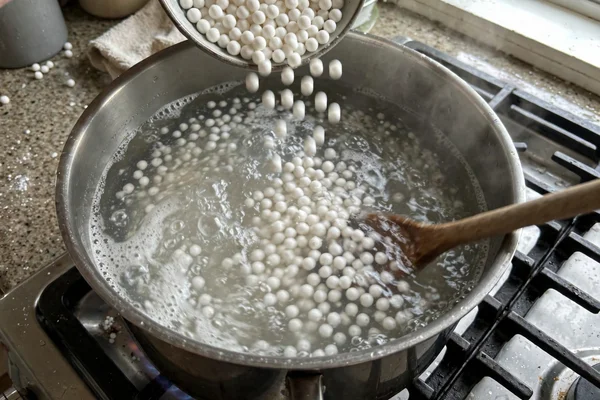
Bring 1.5 liters of water to a rolling boil in a large pot. Add the tapioca pearls. Stir immediately to prevent sticking. Cook for 12 to 15 minutes. Stir occasionally. The pearls turn mostly translucent with a tiny white dot at the center. Turn off the heat. Cover the pot. Rest for 10 minutes. The residual heat finishes the centers.
Step 2: Rinse the pearls cold
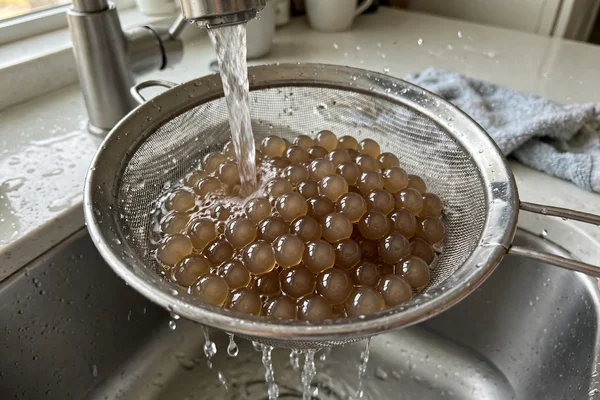
Drain the pearls through a fine sieve. Rinse under cold running water for 30 seconds. Cold water stops the cooking. It also washes off excess surface starch. Transfer the pearls to a bowl of cold water. Keep them submerged until needed. This step prevents clumping.
Step 3: Blend the mango base
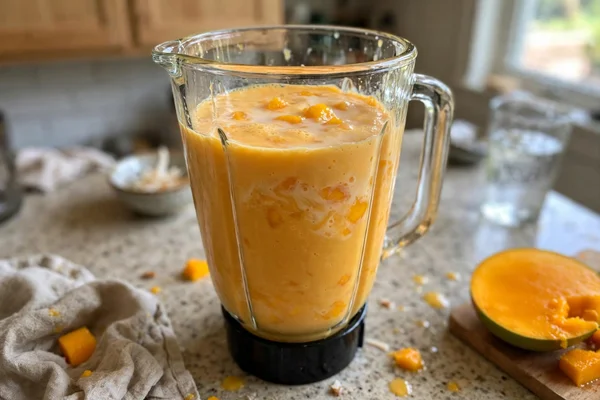
Peel the mangoes. Cut 500 g of flesh into chunks. Place the chunks in a blender. Add the coconut milk, condensed milk, sugar, and salt. Blend on high for 60 seconds. The mixture should look completely smooth and pourable. Taste it. Add 1 more tablespoon of sugar if the mangoes taste tart.
Step 4: Combine the dessert
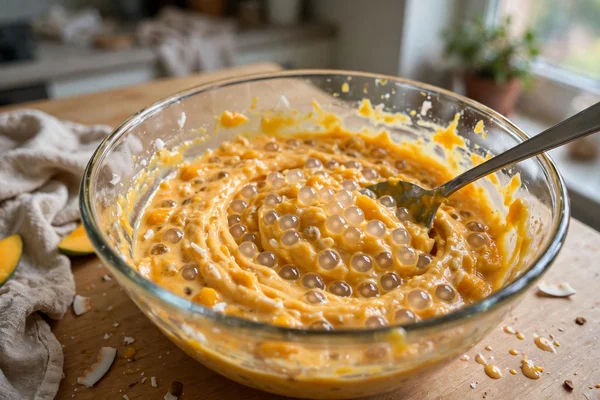
Drain the tapioca pearls. Add them to the mango base. Stir gently with a spoon. Cover the bowl. Refrigerate for at least 60 minutes. The dessert must serve ice cold. Chilling also thickens the base slightly.
Step 5: Assemble and serve
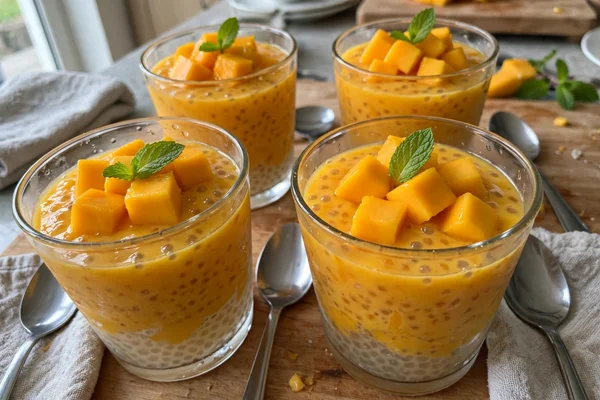
Divide the chilled mango sago among 4 glasses. Top each glass with 35 g of mango cubes. Add pomelo segments if using. Place one mint leaf on top of each glass. Serve immediately with spoons.
Pro Tips
- Choose Ataulfo or Alphonso mangoes. These varieties contain less fiber. They produce the smoothest puree.
- Use only small 2 mm tapioca pearls. Large boba pearls turn rubbery in this dessert. Instant tapioca dissolves into starch.
- Do not skip the cold rinse. Hot pearls continue cooking in the bowl. They become mushy within minutes.
- Add the salt to the base, not the pearls. Salt sharpens the mango flavor without affecting the tapioca texture.
- Thin the base with 30 ml of cold coconut milk if it thickens too much overnight.
- Never freeze mango sago. Thawed tapioca pearls turn hard and grainy. The mango base separates into layers.
- Check mango ripeness by smell. Ripe mangoes smell sweet at the stem end. Unripe mangoes smell like nothing.
- Serve in chilled glasses. Place the glasses in the freezer for 15 minutes before assembling. Cold glasses keep the dessert ice cold at the table.
- Taste the base before chilling. Cold dulls sweetness.
- Cook extra pearls. They keep 1 day in cold water in the fridge.
- Carbohydrates provide 4 calories per gram according to the Atwater system. The pearls are almost pure starch.
Nutrition
One serving is estimated at about 360 calories. It carries roughly 2 grams of protein, 65 grams of carbohydrates, 10 grams of fat. One cup of mango provides about two thirds of the daily vitamin C value according to USDA FoodData Central. An adult needs around 2000 to 2500 calories per day according to the World Health Organization. One serving covers about one sixth of that need.
Note
These values are estimates. Sweeter mangoes raise the count.
Troubleshooting
The pearls clump into one mass
You skipped the cold rinse. Rinse 30 seconds under cold water. Keep the pearls submerged.
The base tastes bland
The mangoes were underripe. Use fruit that smells sweet at the stem end.
Note
Never freeze mango sago. Thawed pearls turn hard and grainy.
FAQs
Can I use frozen mango for mango sago?
Yes. Thaw 500 g of frozen mango chunks completely before blending. Drain any excess liquid. Frozen mango blends into a smooth puree. The flavor matches fresh mango closely when the fruit was ripe at freezing.
What is the difference between sago and tapioca pearls?
True sago comes from sago palm starch. Tapioca pearls come from cassava root starch. Most grocery stores sell tapioca pearls labeled as sago. The two cook and taste almost identically. Buy the small 2 mm tapioca pearls for this recipe.
Why are my tapioca pearls still hard in the center?
Yes, longer resting fixes hard centers. The pearls needed more time in the hot water. After boiling, cover the pot and rest for the full 10 minutes. If white centers remain, boil for 2 more minutes. Always start pearls in a full rolling boil, never in cold water. Old pearls cook unevenly. Buy a fresh packet.
Can I make mango sago dairy free?
Yes. This recipe is already dairy free. Coconut milk and sweetened condensed coconut milk replace all dairy. Check the condensed milk label. Standard condensed milk contains dairy, so use the coconut version for a fully dairy-free dessert.
How long does mango sago keep in the fridge?
It keeps for 2 days in a sealed container. Stir before serving. The pearls firm slightly overnight. They stay pleasant on day two. Discard after day two. The texture degrades and the mango flavor fades. Store the mango cubes separately. They stay bright longer.
Can I make mango sago ahead of time?
Yes. Prepare the mango base and the cooked pearls separately up to 24 hours ahead. Store both in sealed containers in the refrigerator. Combine them 1 hour before serving. Add the fresh mango cubes at serving time so they stay bright.
Can I use light coconut milk?
Yes. The dessert turns thinner. Use full-fat canned coconut milk for the classic body.
Conclusion
Mango sago needs no baking, no special equipment, and no rare ingredients. A pot, a blender, and ripe mangoes produce a dessert with genuine restaurant heritage. Cook the pearls correctly, blend the base smooth, and chill it well. The result earns its place in any summer dessert rotation.